Bad Smell From Geyser Water? Fix It Step By Step + Checklist
Know why water from geysers smells bad. Find solutions and maintenance tips for your water heater to keep the water odour free.

You turn on the shower expecting hot water, but instead get hit with that unmistakable rotten-egg stench. Frustrating, right? Here’s the good news: you’re not alone, and it’s usually fixable. That smell typically comes from hydrogen sulfide gas produced by bacteria thriving in your tank, often mixed with sediment or reactions between water and anode rods.
Most causes respond well to maintenance, though stubborn cases need professional help. This guide walks you through what’s causing it, simple checks you can do, prevention tips, and exactly when to call Concord Services for expert assistance.
Quick Checklist: How to Fix Smelly Geyser Water at Home
Follow these simple steps to eliminate foul odors from your hot water:
- Test the source – Smell cold water separately. If only hot water smells, your geyser is the problem.
- Turn off power – Switch off the geyser. Let it cool completely.
- Flush the tank – Connect a hose to the drain valve. Drain until water runs clear.
- Raise temperature – Set above 60°C for 2-3 hours. This kills bacteria. Lower back to 50-60°C.
- Disinfect with peroxide – Add hydrogen peroxide solution. Let it sit for a few hours. Drain and flush.
- Clean the safety valve – Lift the MFV drain lever monthly. Release trapped deposits.
- Check the anode rod – Replace if heavily corroded. Use aluminum or zinc rods for hard water.
- Flush bathroom pipes – Run hot water through taps for several minutes. Clear sediment buildup.
- Drain if unused – Empty the geyser before vacation. Prevents stagnant water smell.
- Schedule regular maintenance – Flush every 6 months. Keep the temperature at 50-60°C.
Call a professional if: Smell persists, water appears rusty, or geyser is 8-12+ years old.
Not Confident To Repair Your Geyser?
Contact Us For Same Day Doorstep Repair
₹0 Advance Charges
What Does the Smell Mean? Understanding the Type of Odor
| Odor Type | Cause & Explanation |
|---|---|
| Rotten Egg / Sulfur Smell | Caused by hydrogen sulfide gas from sulfate-reducing bacteria in the tank. Often worsened by magnesium anode rod reactions, low temperature, or long inactivity. Indicates the tank needs cleaning. |
| Dirty, Muddy, or Musty Odor | Results from sediment buildup and stagnant water, especially when hot water isn’t used regularly. Hard water mineral deposits support bacterial growth. Flushing the tank helps prevent this. |
| Metallic or Chemical Smell | Signals corrosion inside the tank or a deteriorating anode rod. High dissolved solids can also cause chemical-like odors. Rusty water suggests the rod needs replacement and service attention. |
Rotten Egg or Sulfur Smell
That unmistakable rotten-egg odor is typically hydrogen sulfide gas produced by sulfate-reducing bacteria thriving in your warm water tank. The bacteria feed on naturally occurring sulfates in your water, creating this pungent gas as a byproduct.
Sometimes it’s amplified when your magnesium anode rod reacts with sulfates in the water. Low temperature settings and extended periods of inactivity make this worse.
The smell alone isn’t dangerous at household levels, but it’s definitely a signal your tank needs cleaning and maintenance to eliminate the bacteria.
Dirty, Muddy, or Musty Odor
A musty or earthy smell usually signals sediment buildup and stagnant water sitting too long in your tank. This happens especially if you don’t use hot water regularly or leave the geyser unused during vacations. Bacterial growth thrives in this settled sediment, creating that unpleasant musty odor.
Hard water areas are particularly prone to this since mineral deposits create ideal conditions for bacterial activity. Simply draining the water when not in use and flushing periodically can prevent this issue from developing.
Metallic or Chemical Smell
A metallic or chemical odor often signals corrosion inside your tank or deterioration of your anode rod, which is designed to corrode to protect the tank itself. Sometimes high electrical conductivity of water due to dissolved solids in your input water causes chemical smells.
If you’re also seeing rust-colored water flowing out, your anode rod may be spent and needs replacement.
These issues require attention from authorized service technicians to prevent further tank damage and water quality problems.
Can’t figure it out on your own? No worries. Concord Services is here to help. We’re one of Kolkata’s most trusted geyser repair specialists, serving you and your neighbors with fast, reliable fixes.
What Causes of Smelly Hot Water In Your Geyser?
Bacterial Growth Inside the Geyser
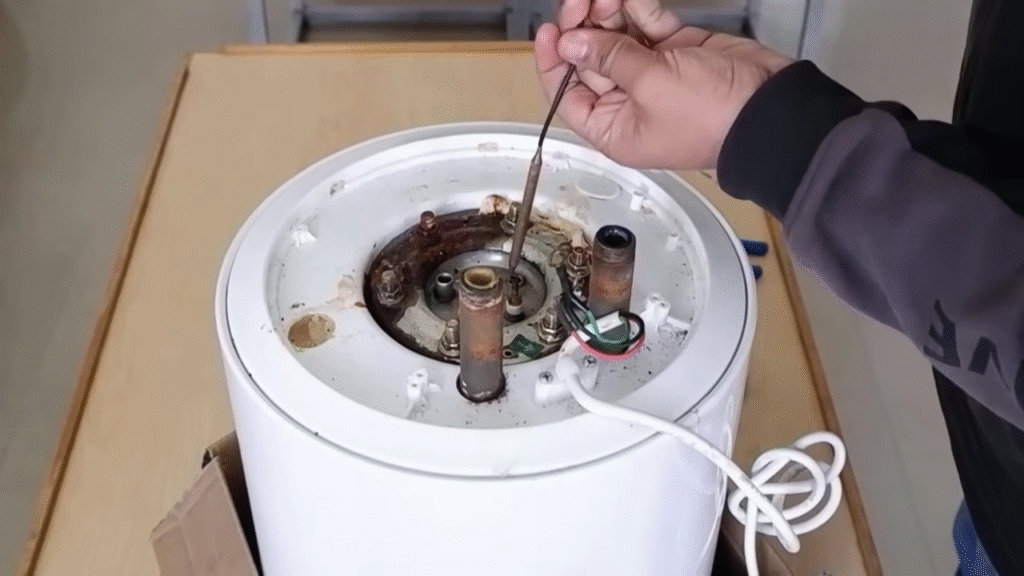
Low temperature settings below 60°C create an ideal breeding ground for sulfate-reducing bacteria. When you don’t use hot water regularly or leave your geyser unused for extended periods, bacteria multiply unchecked in the warm tank.
These bacteria produce hydrogen sulfide gas, causing that rotten-egg smell. Setting your temperature above 60°C and using your geyser regularly helps discourage bacterial growth significantly.
Sediment & Mineral Buildup

Over months, minerals from hard water settle at the bottom of your tank, creating a bacteria-friendly environment. This sediment accumulation produces popping and rumbling noises alongside unpleasant odors.
The buildup acts as insulation, reducing heating efficiency while harboring bacterial colonies. Regular tank flushing removes these deposits and prevents the odor problem from developing or worsening over time.
Suggested Read: Geyser Not Heating Water Solutions
Reaction Between Magnesium Anode Rod & Sulfates
Your magnesium anode rod is designed to corrode and protect your tank, but it chemically reacts with sulfates in your water supply.
This reaction produces hydrogen sulfide gas, responsible for that distinctive rotten-egg smell. If you have sulfur in your water, this becomes a significant odor source that regular cleaning alone won’t fully resolve without addressing the anode rod itself.
Stagnant Water Inside Tank
Long vacations or periods of non-usage allow water to sit stagnant inside your tank. Bacteria thrive in undisturbed warm water, producing foul-smelling hydrogen sulfide gas.
The longer water remains unused, the stronger the smell becomes. Draining your geyser during extended trips and refilling it before reuse prevents this common issue effectively.
High TDS or Hard Water
Hard water with high total dissolved solids accelerates scale formation inside your tank, creating pockets where bacteria hide and multiply. Minerals deposit on heating elements and tank walls, fostering bacterial growth.
Areas with naturally hard water experience odor problems more frequently. Installing a water softener or using descaling treatments during regular maintenance helps minimize this issue significantly.
Suggested Read: How to Install An Electrical Geyser? Step By Step Process
Damaged or Aging Anode Rod
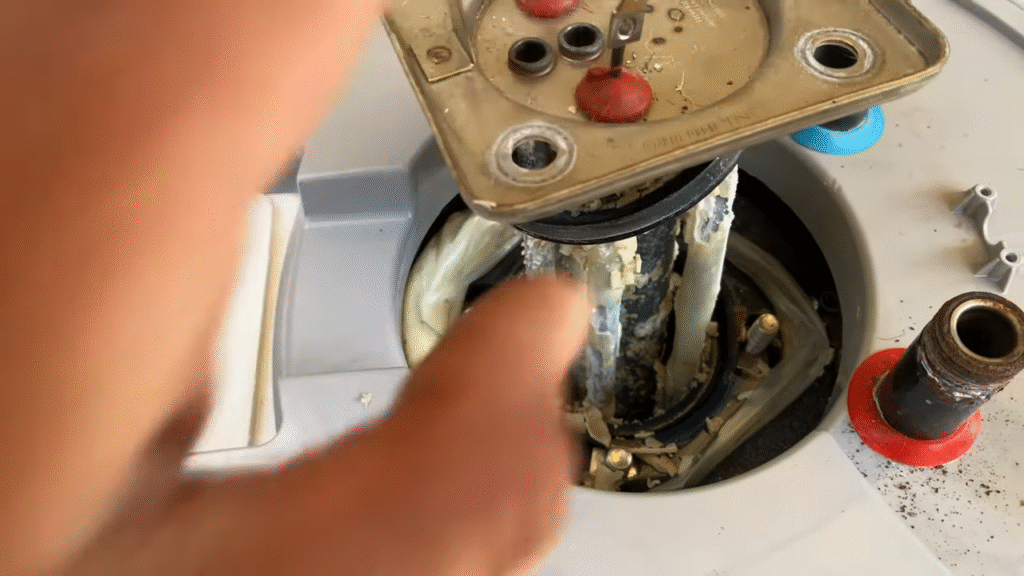
A worn or consumed anode rod no longer protects your tank effectively, allowing corrosion to begin. Corroded tanks produce rust-colored water and unpleasant metallic odors.
The service life of your anode rod depends on water quality and quantity flowing through it.
Replacing an aged anode rod every 2-3 years prevents corrosion-related odors and extends your geyser’s lifespan considerably.
Suggested Read: Geyser Water Pressure Low? Here’s How to Fix It Quickly
Step-by-Step Troubleshooting: How to Fix Smelly Geyser Water
Confirm Whether the Smell Is from Hot Water Only
Start by isolating the problem:
- Fill a glass with cold water directly from the tap, away from your geyser connection
- Smell the cold water separately
- If cold water smells fine but hot water reeks → Problem is inside your geyser tank
- If both smell equally bad → Problem lies in your water supply itself, not your appliance
This simple check saves you time and points directly to where the real issue lives.
Step 2: Flush the Geyser Tank
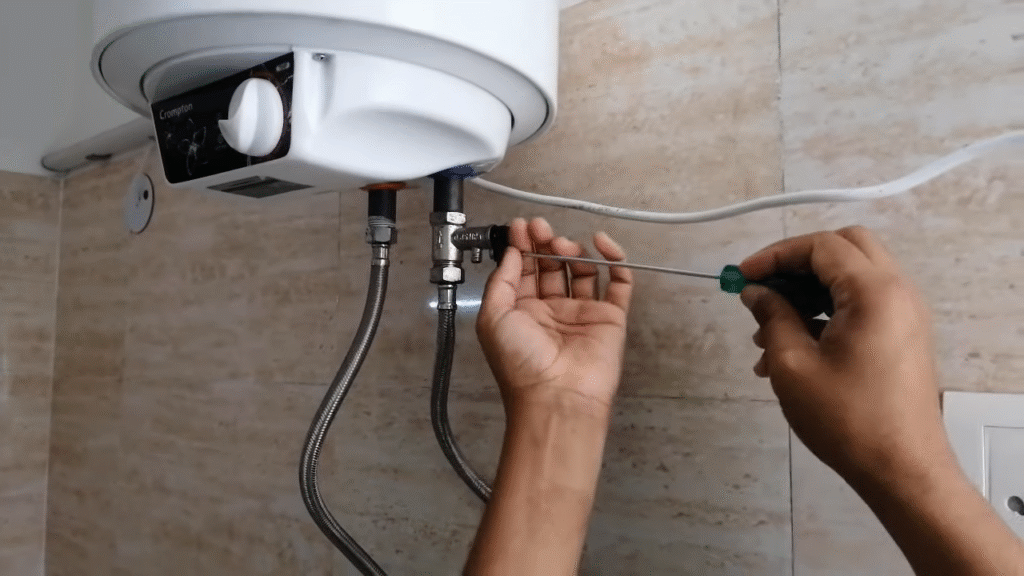
Follow these steps to flush your tank:
- Turn off the geyser’s power supply
- Allow it to cool completely
- Locate the drain valve at the bottom
- Attach a hose to direct water into a bucket or drain
- Open the drain valve and let water flow until it runs clear
- Observe the sediment and debris coming out
What this removes:
- Bacteria buildup
- Scale deposits
- Trapped organic matter causing the smell
Maintenance tip: Experts recommend flushing every 6 months to prevent odor problems from developing.
Step 3: Raise Temperature Above 60°C Temporarily
Here’s how thermal disinfection works:
- High water temperatures kill sulfate-reducing bacteria responsible for rotten-egg smell
- Set your thermostat to a higher temperature setting
- Keep the geyser heating for 2-3 hours
- This thermal treatment eliminates bacterial colonies thriving in your tank
- After treatment: Lower temperature back to 50-60°C for regular use (prevents scalding risks)
Step 4: Disinfect the Tank
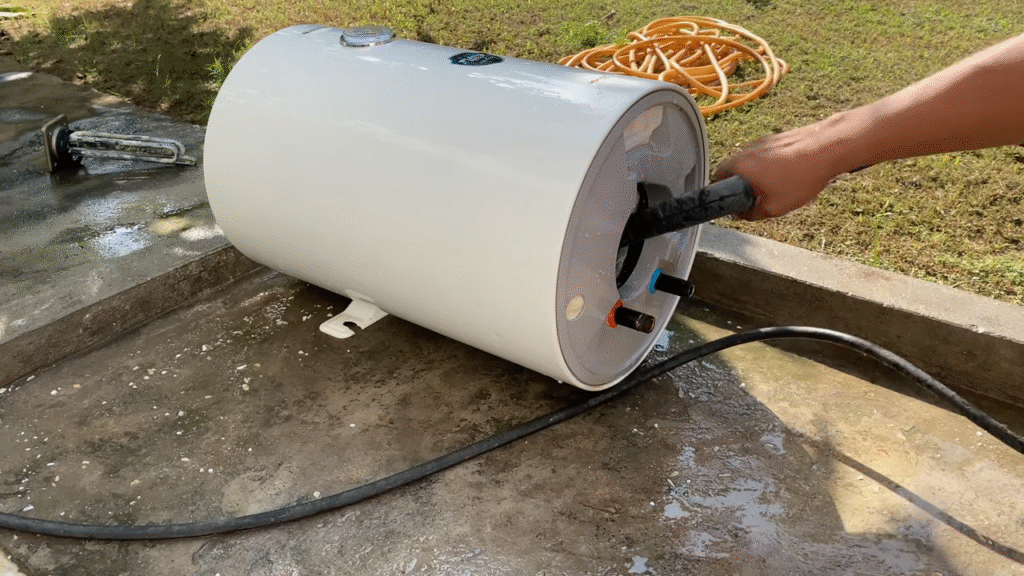
After flushing, follow these disinfection steps:
- Add hydrogen peroxide solution to your tank
- Let it circulate inside for a few hours
- This sanitizes interior surfaces where bacteria hide
- Drain the tank completely
- Refill with fresh water
- Flush several times to remove all peroxide traces
- Resume normal use
The peroxide works by neutralizing odors and killing remaining bacterial colonies.
Step 5: Check & Replace Anode Rod
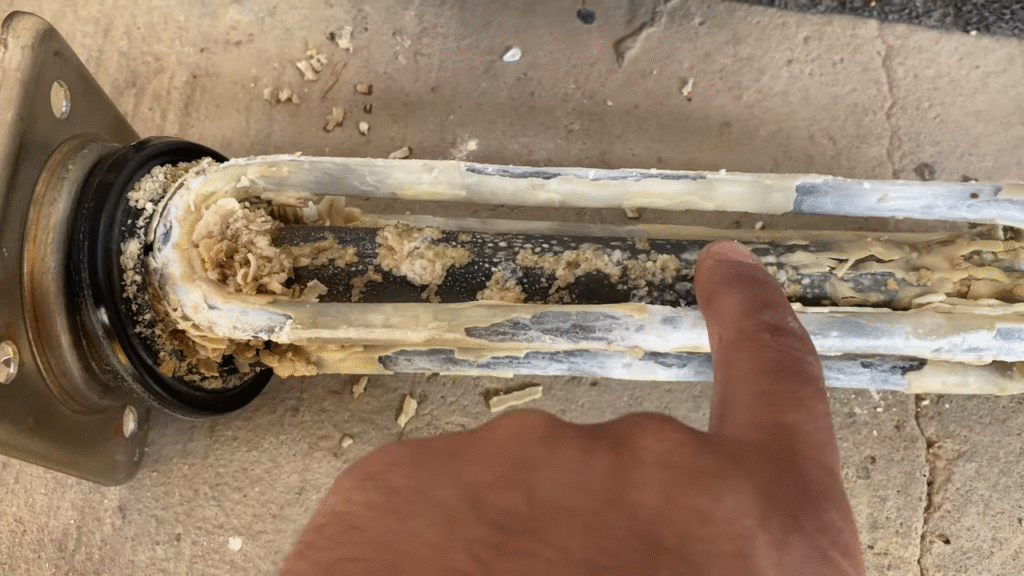
Your sacrificial anode rod needs attention:
- What it does: Protects the tank by corroding instead of the tank itself
- Signs it’s worn: Heavily consumed or completely used up
- Solution: Replace with a new anode rod
Better alternatives for odor-prone areas:
- Aluminum anode rods (reduce sulfur-related odors)
- Zinc anode rods (more effective than magnesium for hard water)
Brands allowing easy replacement: AO Smith, Symphony, Bajaj all permit tank cleaning and anode replacement as regular maintenance. Check your manual for specific procedures.
Step 6: Clean the MFV / NRV Valve
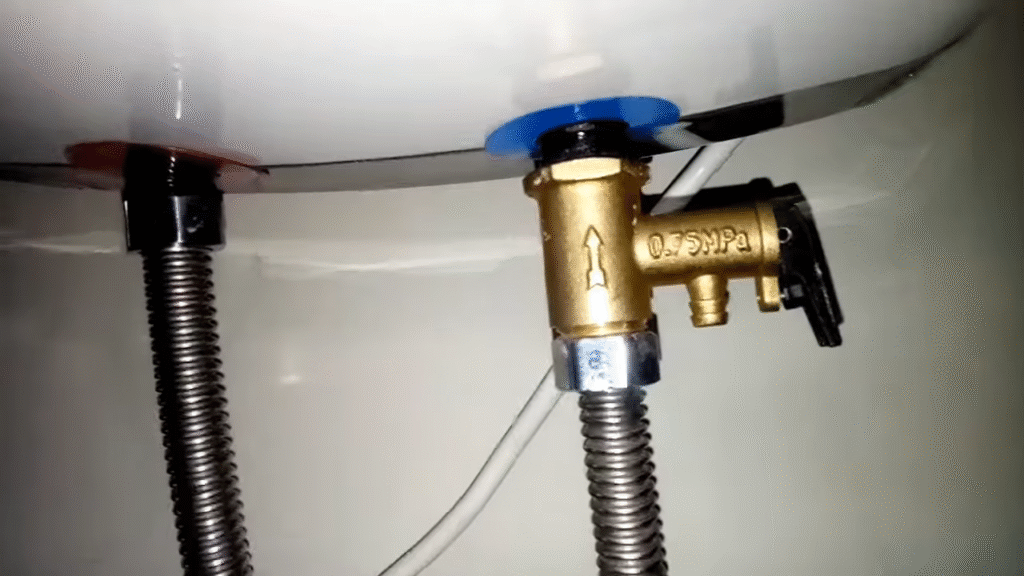
Scale deposits trap sediment in your safety valve:
Regular maintenance routine:
- Locate the drain lever on your Multi-Function Valve
- Lift it monthly to release salt deposits
- Flush trapped material from inside
- This prevents odor-causing buildup from accumulating
Benefits:
- Keeps MFV clean and functional
- Reduces smell problems significantly
- Ensures safety valve operates properly
Step 7: Flush Bathroom Pipelines (If Needed)
If odor persists after tank cleaning, try this:
- Run hot water through your bathroom taps
- Leave one end open to release trapped air
- This helps dislodge sediment from pipes connected to your geyser
- Continue flushing for several minutes
When to seek help:
- Persistent pipeline odors after flushing
- Visible sludge or discoloration in water
- Water pressure issues alongside smell
Professional plumbing inspection identifies blockages or deteriorated sections that DIY flushing can’t fix.
Steps To Prevent Smelly Water in Geyser in the Future
Flush the Geyser Every 6 Months
Regular flushing is your best defense against odor problems:
- Removes accumulated sediment before it becomes a bacterial breeding ground
- Eliminates mineral deposits that trap bacteria and organic matter
- Prevents scale buildup that creates rumbling noises and smells
- Takes just 15-30 minutes but saves you months of frustration
Pro tip: Schedule flushing like you would a dental checkup. Mark it on your calendar every six months. This simple habit keeps your tank clean and fresh, preventing the conditions that allow bacteria to thrive in the first place.
Use a Water Softener or Pre-Filter in Hard Water Areas
Hard water accelerates every problem:
- High mineral content (TDS) deposits scale on heating elements and tank walls
- These deposits create perfect pockets for bacterial colonies to hide
- Scale buildup reduces heating efficiency while harboring odor-causing bacteria
- A water softener treats the problem at the source
For your geyser specifically:
- Install a pre-filter before the inlet to catch larger particles
- This reduces mineral load entering your tank
- Softened water means less sediment, fewer bacteria, and fewer odor problems
Set Temperature to Safe but Effective Levels (50–60°C)
Temperature control directly impacts bacterial growth:
- Bacteria thrive at low temperatures below 50°C
- Setting your geyser to 50-60°C keeps water hot enough to discourage bacterial multiplication
- This temperature range is also safe—prevents scalding accidents in your bathroom
- Avoid keeping temperature too low, even to save electricity
The balance matters: Too cold invites bacteria; too hot risks burns. The 50-60°C sweet spot protects both your health and your water quality.
Replace Anode Rod Every 3–5 Years
Your anode rod works constantly to protect the tank:
- It’s a sacrificial component designed to corrode instead of your tank
- Over time, it gets consumed and loses its protective power
- A worn anode rod can no longer prevent corrosion or bacterial reactions
- Replacement prevents rust-colored water and metal-related odors
Maintenance schedule:
- Check anode condition annually
- Replace every 2-3 years in hard water areas
- Replace every 3-5 years in softer water regions
- This simple replacement prevents expensive tank problems down the road
Drain Geyser If Not Using for Long Periods
Stagnant water is bacteria’s best friend:
- Extended vacations or off-season non-usage allows water to sit undisturbed
- Bacteria multiply rapidly in warm, stagnant conditions
- Foul smells develop within days of inactivity
- Draining before long trips prevents this entirely
When to drain:
- Before vacation trips lasting more than a week
- During off-seasons when you won’t need hot water
- Before winter if you’re seasonal users
- Refill and run the geyser for 15-20 minutes when you return
This preventive step eliminates the stagnant water problem completely, ensuring fresh-smelling water when you return.
When Should You Call a Professional Technician?
Smell Persists Even After Flushing
If you’ve flushed your tank, raised the temperature, disinfected with hydrogen peroxide, and cleaned the MFV valve but the smell still lingers, something deeper is wrong. This could indicate bacterial colonies embedded in places you can’t reach or a systemic issue with your water supply that needs expert diagnosis.
Concord Services technicians have the tools and expertise to identify hidden problems and provide targeted solutions that DIY methods can’t address.
Anode Rod Replacement Is Required
While anode rod replacement sounds straightforward, it requires draining the tank, accessing internal components, and ensuring proper reassembly without damaging seals or wiring. Getting it wrong can void your warranty or cause leaks and electrical issues.
Rust-Colored Water Indicates Tank Corrosion
Rust-colored or brown water flowing from your hot tap signals advanced corrosion inside your tank, which is a serious issue that demands immediate attention. This means your tank’s protective layer is compromised and bacteria can thrive more freely in corroded areas.
Safety Valves Are Leaking or Stuck
Multi-Function Valves and pressure relief valves are safety-critical components designed to protect your geyser from dangerous pressure buildup. If they’re leaking, stuck, or not responding properly, they need professional service to prevent potential hazards or tank damage.
Suggested Read: Geyser Water Leaking Issues Solutions
Water Heater Is 8–12+ Years Old and Inefficient
Geysers older than 8-12 years often develop multiple problems simultaneously—odors, reduced heating efficiency, frequent repairs, and increased energy bills. At this age, professional diagnosis helps determine whether continued repairs make financial sense or if replacement is the better investment.
Conclusion
If your geyser’s hot water smells like rotten eggs, you now know the culprit is usually hydrogen sulfide from bacterial growth. Flushing the tank, raising the temperature, or replacing the anode rod can often solve the problem. But if the smell persists despite your efforts, it’s time to call in a professional.
Don’t ignore it – your family’s comfort and health matter. Get your geyser inspected and enjoy fresh, odor-free hot water again.