Geyser Power or Light Not Working? Step By Step Troubleshoot
If your geyser stops lighting up or heating, don’t worry. This guide explains warning signs, DIY checks, safety tips, and the real reasons behind power and light failures.
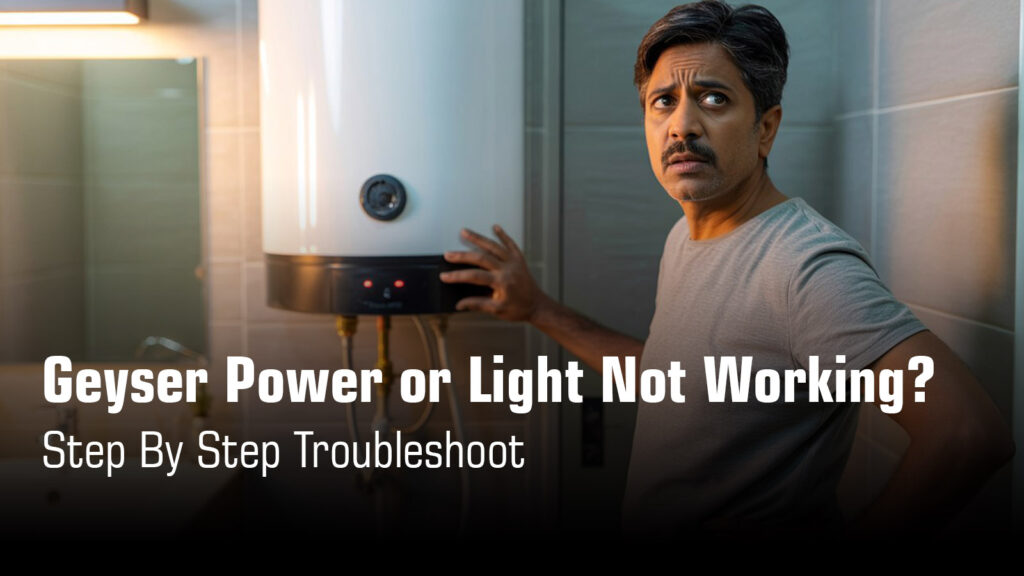
Here’s nothing quite like the disappointment of stepping into the shower only to find your geyser has stopped working. No hot water. The lights aren’t glowing. Maybe it’s tripping your power supply repeatedly. If this sounds familiar, you’re not alone, and honestly, it’s probably not as complicated as it feels right now.
Here’s the good news: most geyser power and light issues are surprisingly straightforward to understand, and many can be fixed quickly. But let’s be real, some problems do need a professional eye. In this guide, we’ll walk you through the common culprits, help you figure out what’s actually going on with your geyser, and show you when it’s time to call in the experts. Because sometimes the simplest fix is knowing when to ask for help.
Troubleshooting Checklist for Homeowners
Before calling a technician, run through these safe, quick steps. Most of the time, one of these will solve your problem.
Step-by-Step Checklist:
Critical Warning: Never open the geyser body yourself. Internal components carry electrical risk and require professional handling.
If these steps don’t work, it’s time to contact an expert.
What Power and Indicator Lights Mean?
Your geyser speaks to you through its lights, and learning this language is half the battle. The power indicator lamp glows whenever your geyser is connected to the electrical supply. It’s basically saying, “I’m ready and waiting.” The heating indicator lamp, on the other hand, only glows when water is actively heating up. Once your water reaches the set temperature, this light switches off, meaning your geyser has done its job.
Some newer models get fancier with color-changing LEDs. Blue light means your water is heating right now. When it switches to amber, your water has reached the desired temperature and is ready to use. Smarter controllers go even further, displaying error codes like E1 or E2 when something’s not right, giving you clues about what needs attention. Understanding these signals helps you catch problems early before they become bigger headaches.
Can’t figure it out on your own? No worries. Concord Services is here to help. We’re one of Kolkata’s most trusted geyser repair specialists, serving you and your neighbors with fast, reliable fixes.
Common Reasons Your Geyser Has No Power
When your geyser won’t switch on at all, the culprit usually falls into one of these categories. Let’s break down what’s likely happening and what you can do about it.
Loose or Faulty Electrical Connections
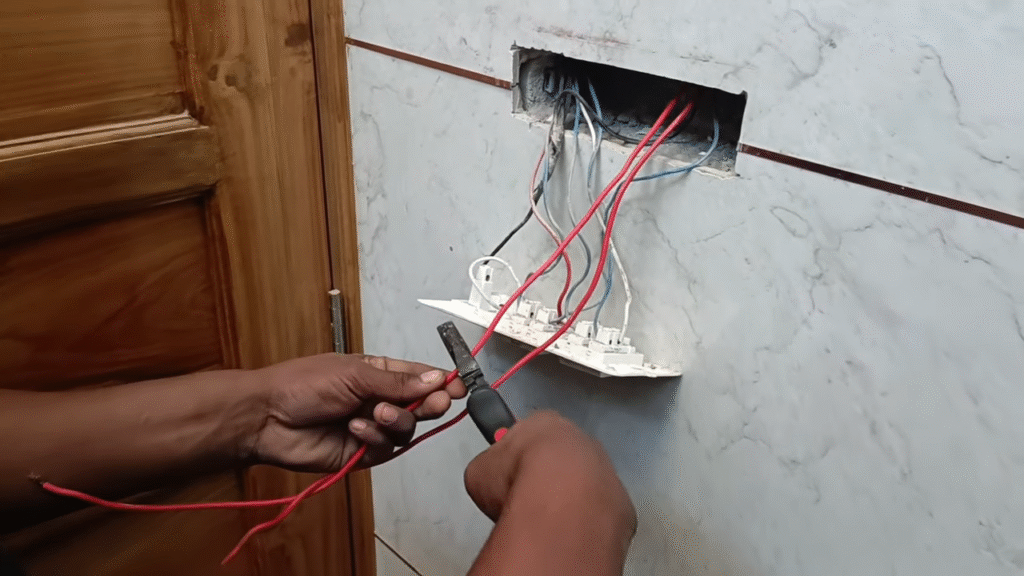
This is the most common reason geysers stop working, and the good news is it’s often the easiest to fix.
- Plug not fitted securely – Your plug might look connected, but it’s not making proper contact with the socket. Try unplugging and reinserting it firmly.
- Defective socket – The outlet itself could be the problem. Test it with another appliance to confirm it’s working.
- Damaged power cord – Look for visible signs of wear, burns, or cuts. A damaged cord is dangerous and needs replacement immediately.
Important note from geyser manuals: Always use independent sockets, never adapters. Proper earthing is essential. Never connect the earth wire to neutral or water pipes.
Suggested Read:
Geyser Making Noise? Here Are The Solutions
Geyser Water Pressure Low? Here’s How to Fix It Quickly
MCB or Fuse Tripping
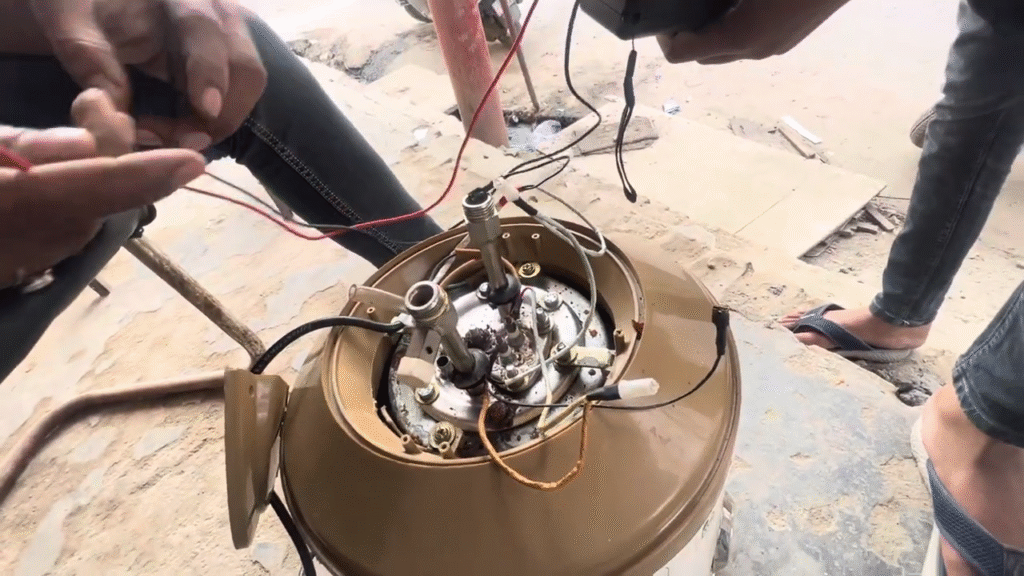
Your geyser’s circuit breaker keeps shutting off? That’s actually your home’s safety system working.
Common causes:
- Electrical overload on the circuit
- Leakage current from faulty wiring
- Short circuit in the heating element
Modern smart geysers like Havells and Racold models actually shut off automatically when they detect leakage, displaying an E1 error code. This is a safety feature, not a defect.
Internal Component Failure
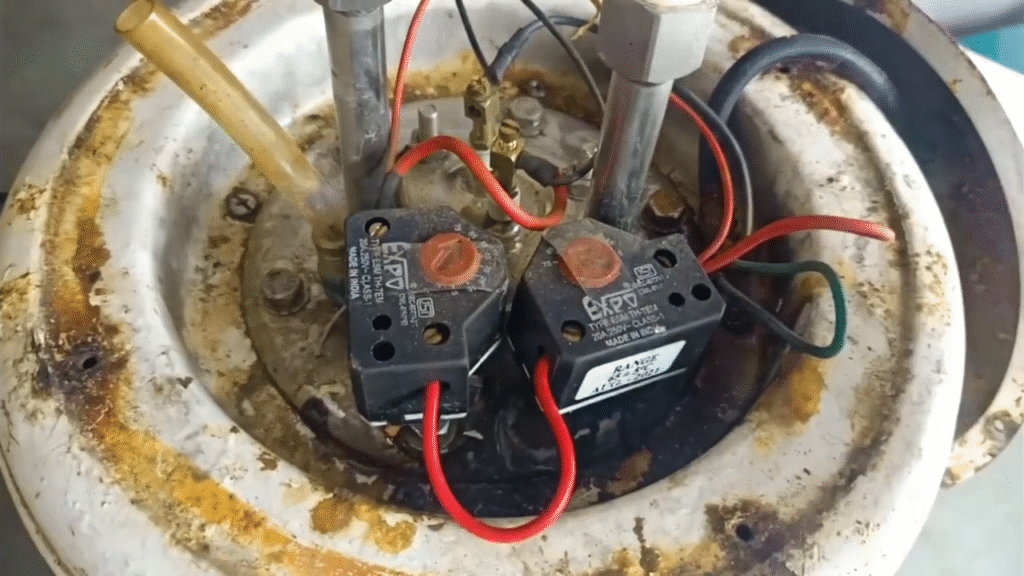
When connections look fine but nothing happens, the issue is likely inside.
| Component | What Happens | Next Step |
|---|---|---|
| Faulty Thermostat | Won’t trigger power on | Needs professional inspection or replacement |
| Thermal Cutout Tripped | Safety device activated due to overheating | Press reset button (found inside most geysers) |
| Faulty Heating Element | No power draw detected | Requires technician replacement |
| Damaged PCB | WiFi or digital models unresponsive | Professional repair needed |
The thermostat reset button is your first DIY move here. Many Havells, Racold, and Bajaj models have a small black or red reset button. Press it gently with a screwdriver, and you might bring your geyser back to life instantly.
Facing Geyser Problems? Call Our Geyser Technicians
₹0 Advance Charges
Why Geyser Indicator Lights Don’t Turn On?
Your geyser is getting power, but the lights still won’t glow. This usually means an internal safety system has kicked in to protect your appliance. Let’s figure out what’s happening.
Power Supply Reached the Geyser but Internal Safety Systems Triggered
This is actually your geyser being smart, not broken.
Thermal Cutout Trip
Your geyser has a built-in safety device called a thermal cutout. It’s designed to shut everything down if the water temperature climbs too high or if the geyser tries to heat with no water inside (dry heating). When this happens, lights go off completely.
Common triggers:
- Water overheating beyond safe limits
- Operating the geyser without water in the tank
- Faulty thermostat keeping heat on too long
Most geysers including Havells and AO Smith models have a small reset button (usually black or red) located inside the unit. This is your first fix: switch off power, locate the button, press it gently with a screwdriver, and switch back on.
Faulty Thermostat
If the thermostat isn’t working properly, it can’t signal the heating cycle to start, which means indicator lights never activate.
LED and Display Errors in Smart Geysers
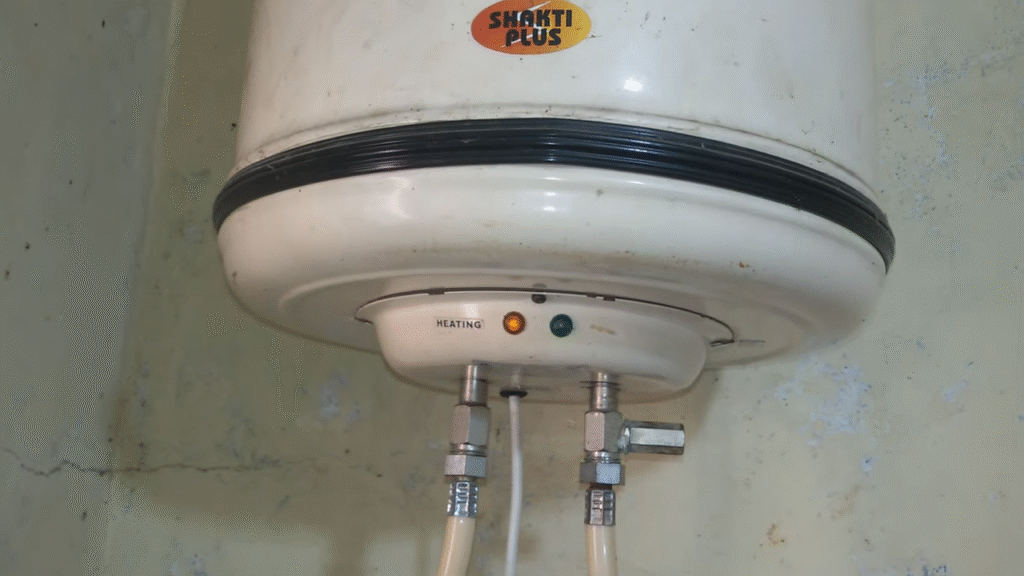
Newer WiFi and digital models communicate problems through error codes rather than just going dark.
| Model/Brand | Error Code | Meaning | What to Do |
|---|---|---|---|
| Symphony | E1 | Leakage current detected | Switch off, restart. If persists, call technician |
| Symphony | E2 | Temperature sensor fault | Check water supply, ensure tank is full, contact service |
| Symphony | E3 | Battery drain (wireless controller) | Replace batteries with fresh ones |
| Symphony | E4 | Controller pairing issue | Re-pair controller with main unit |
| AO Smith | Internal wiring fault | Electronics malfunction | Professional diagnosis needed |
| Havells | Blue LED stuck (not turning amber) | Thermostat or heating element issue | Thermostat needs inspection or replacement |
Pro tip: Write down any error code you see. It’s like your geyser telling the technician exactly what’s wrong before they even arrive.
Suggested Reads:
Safety Tips for Using Instant & Storage Geysers At Home
Common geyser problems and their solutions
When You Must Call a Professional Immediately
Don’t wait. Don’t experiment. Contact an authorized technician right away if you notice any of these warning signs. Your safety and your home’s electrical system depend on it.
Danger Signs:
Bottom line: Your safety comes first. Professional repair is worth the cost when electrical hazards are involved. Authorized technicians have the tools and training to diagnose and fix these issues safely.
Suggested Reads: How to properly install a geyser?
Preventing Power & Light Issues in the Future
Most geyser problems are preventable with simple, consistent care. Here’s what the experts recommend.
Maintenance Essentials:
Small habits now save big repair bills later.
Suggested Reads: Instant geysers vs storage geyser: which one shoud you use?