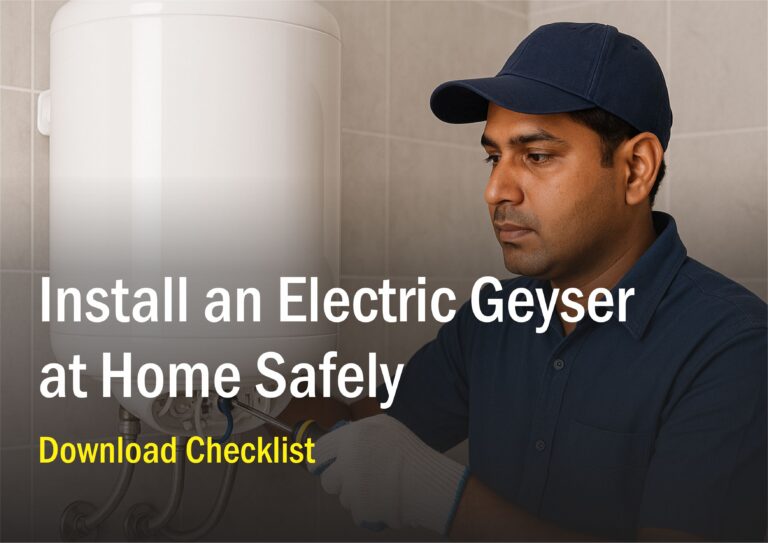
Geyser Water Pressure Low? Here’s How to Fix It Quickly
Struggling with weak hot water flow? Learn the real causes of low geyser pressure and simple fixes to restore full flow. Easy Step by Step checklist included.

You’ve probably noticed this: your geyser’s heating indicator glows, the water’s piping hot, but when you turn on the shower, barely a trickle comes out. Honestly, low hot water pressure might feel worse than no hot water at all, you’re this close to a good shower, yet stuck with frustration.
Here’s the good news: most low-pressure issues stem from minor blockages or simple installation mistakes. A clogged filter at the inlet, trapped air in the tank, or even a misaligned pipe can slow things down. Some cases, like faulty safety valves or damaged internal assemblies, do need a trained technician’s eye. But let’s be honest, you’re often just one quick fix away from full flow again.
Checklist to Fix Geyser Low Pressure Problem
Here’s a simple 10-point checklist for common users to fix the Geyser Low Pressure Problem:
Call a professional if: Low water pressure persists, or geyser is 8-12+ years old.
Not Confident To Repair Your Geyser?
Contact Us For Same Day Doorstep Repair
₹0 Advance Charges
What Exactly Is Low Water Pressure in a Geyser?
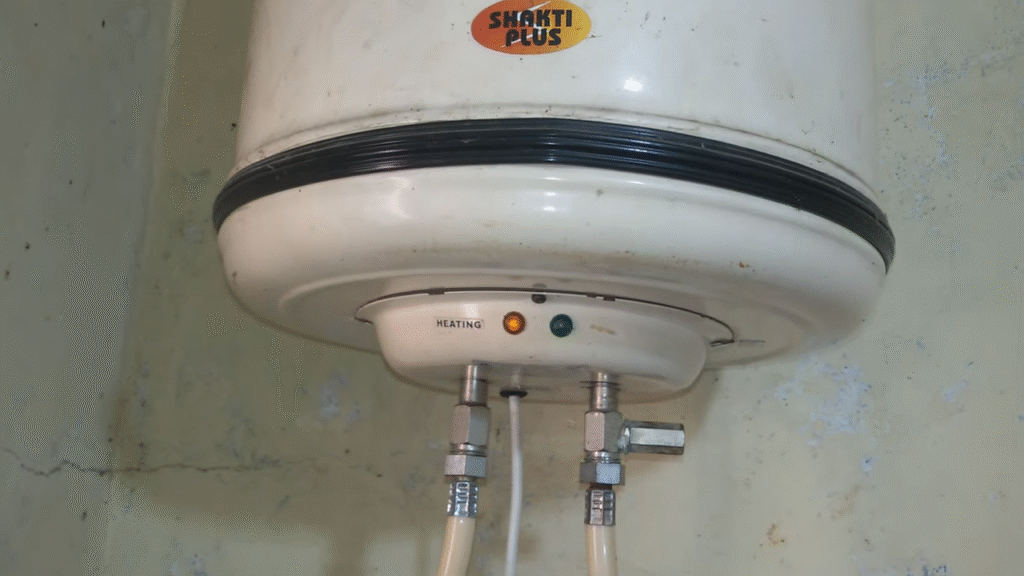
Low water pressure isn’t always a whole-bathroom problem. Sometimes it’s just your hot water that’s weak.
Spot the difference:
- Entire bathroom pressure low: Issue with your main supply or building’s plumbing
- Only hot water weak: Problem’s inside or around your geyser
Common symptoms you’ll notice:
- Only 2 to 4 litres trickle out from a 15-litre geyser
- Your geyser heats up fine, indicator glows, but flow suddenly stops or slows to nothing
- Cold water gushes out strong, but hot water barely drips
Why geysers are fussier:
Storage geysers have internal pipes, inlet filters, and safety valves. Any tiny debris, limescale, or trapped air can choke the flow. Your cold tap doesn’t have all that, so it runs fine while your geyser struggles.
Suggested Read: Geyser Water Leakage – Common Problems and Simple Solutions
Common Causes of Low Water Pressure in Geysers
Blocked Inlet or Outlet Filters (Most common)
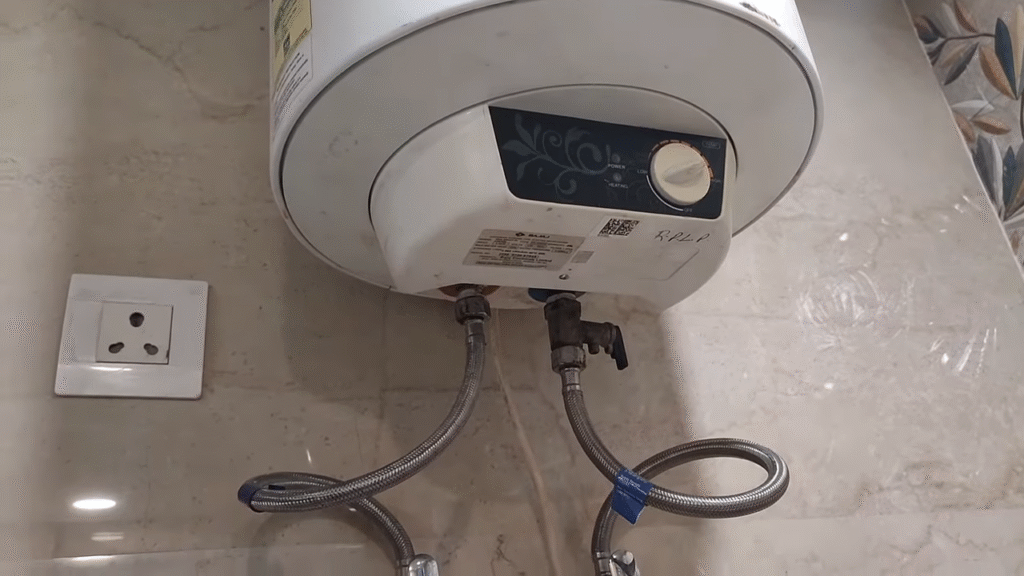
Hard water leaves behind sediments, dirt, and tiny debris that clog your geyser’s inlet and outlet filters. You’ll notice uneven flow or sudden pressure drops when you turn on the tap. The fix? Cleaning these clogged filters usually brings your water pressure right back to normal. It’s the first thing technicians check because it’s so common and easy to solve.
Non-Return Valve (NRV) / Flow Stop Valve Restriction
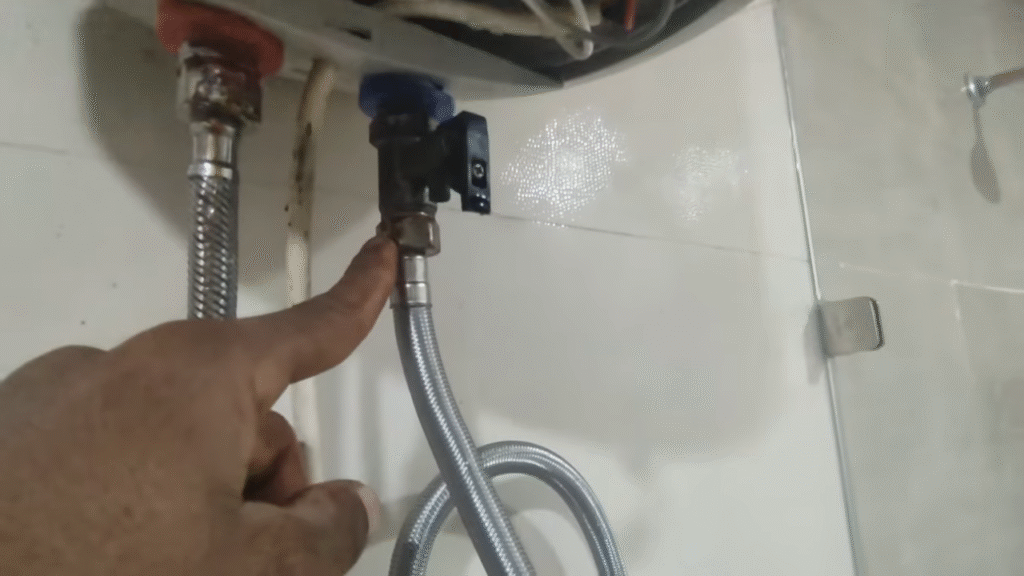
Your geyser likely has an NRV to stop hot water from flowing backward. That’s useful in multi-storey buildings, but if you’re on the ground floor, this valve just slows things down unnecessarily. Some technicians remove the NRV spring to boost flow by 3 to 5 times. Just know this: removing it improves pressure but disables the safety backflow protection.
Improper or Modified Inlet Pipe Setup
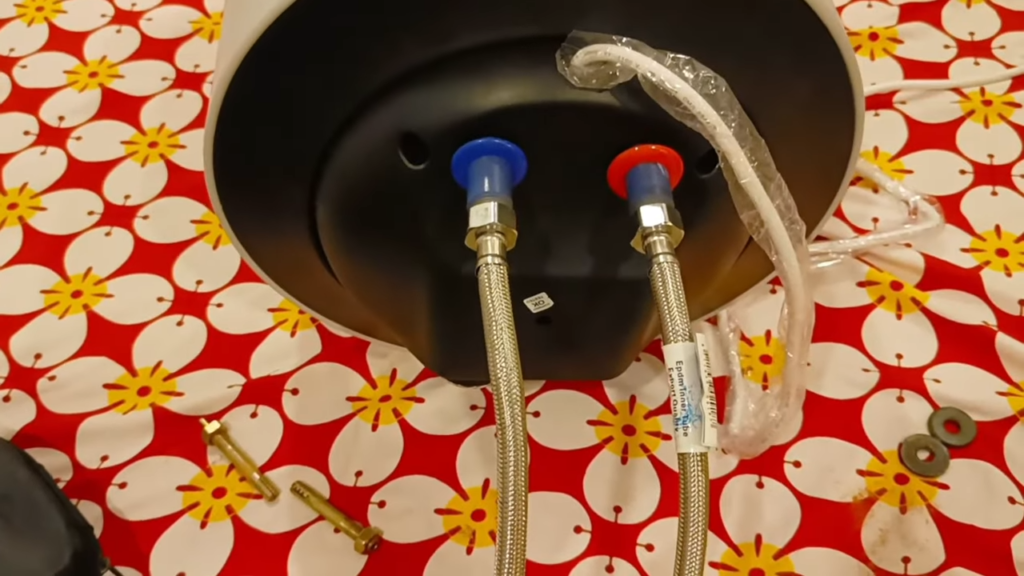
DIY fixes, wrong pipe sizes, or bent connections can choke water flow. Sometimes pipes get cut incorrectly or assembled backward, directing water back into the tank instead of out to your tap. The result? You get only 2 litres from a 15-litre geyser. Proper factory-designed inlet and outlet setups matter more than you’d think.
Air Trapped Inside the Geyser
Air pockets inside your geyser tank block water from building full pressure. It’s like trying to fill a bottle without letting air escape. Opening the safety valve or outlet lets trapped air out, and suddenly your flow improves dramatically. Technicians demonstrate this quick fix all the time with instant results.
Scale Build-up Inside Tank or Heating Element
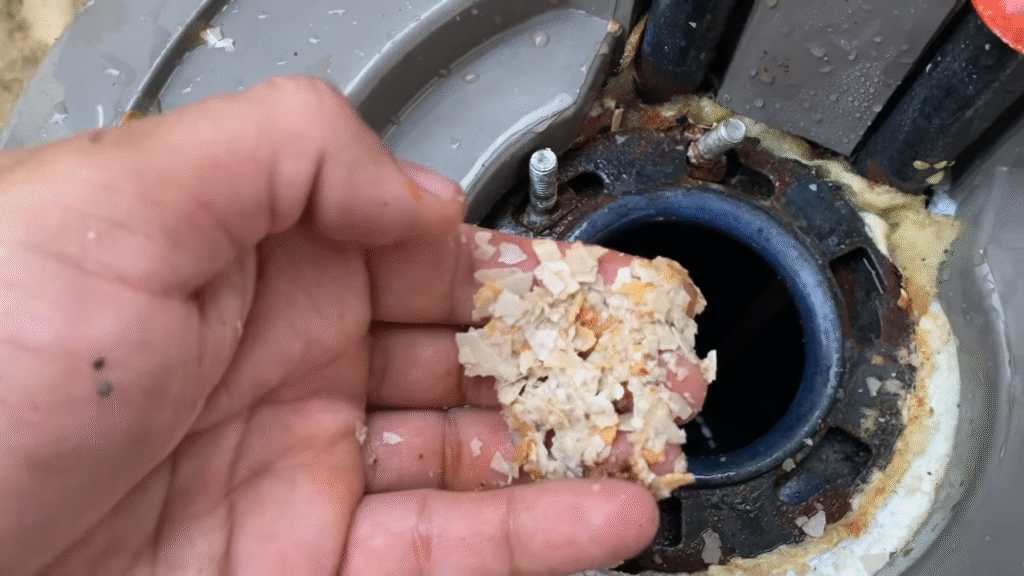
If you live in a hard-water area, limescale and mineral deposits slowly narrow the water pathways inside your tank. Over time, sediment clogs up around the heating element and pipes, reducing flow and making temperatures unpredictable. Regular descaling and annual servicing keep your geyser flowing smoothly and heating efficiently.
Shower Mixer / Diverter Blockages
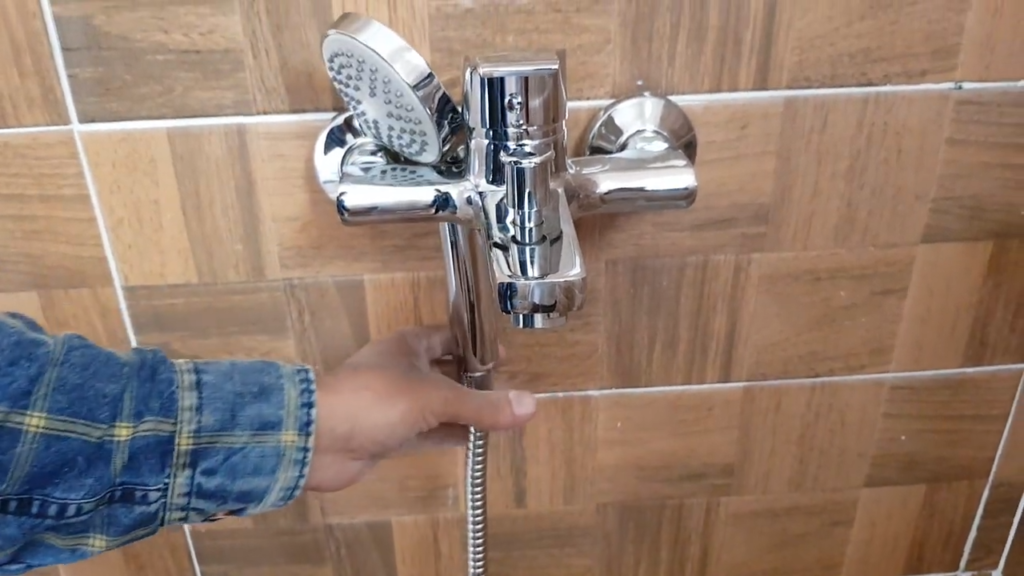
When hot water pressure is weak only in your shower but fine at other taps, the problem’s likely in your shower mixer. Tiny filters inside the mixer head get clogged with debris. Remove the mixer, clean the filters with a soft brush, and you’ll often see pressure restored immediately. It’s simpler than you think.
Altitude or Low Height Between Tank & Geyser
Natural water pressure depends on gravity. If your overhead tank sits too low or your bathroom is almost level with it, pressure weakens naturally. Old homes or improperly positioned tanks often face this. Without enough height, water struggles to push through your geyser’s safety valves and pipes, leaving you with frustratingly slow flow.
Can’t figure it out on your own? No worries at all. Concord Services is here to help with expert geyser repair in Kolkata. Trusted by homeowners across the city, we provide fast, reliable solutions to get your geyser working safely again, right when you need it.
Step-by-Step Solutions to Fix Low Geyser Water Pressure
Clean the Inlet & Outlet Filters
Start by switching off your geyser’s power and closing the water supply. Locate the inlet and outlet connections, remove the filter mesh carefully, and wash away all the dirt and debris under running water. Use a soft brush if needed. Reconnect everything snugly and test your pressure. This simple cleaning often solves the problem instantly.
Inspect or Modify the Non-Return Valve (With Caution)

If you’re on the ground floor and a technician approves, you can remove the NRV spring to boost flow. But here’s the thing: never do this in multi-storey buildings where backflow is a real risk. Modifying safety valves should only be done by a trained professional who understands your setup.
Correct (or Replace) Faulty Inlet/Outlet Pipes
Check for bent, cut, or poorly fitted pipes around your geyser. Replace them with proper factory-designed inlet and outlet assemblies. Use quality gaskets and seals to prevent leaks. Sometimes the simplest fix is just putting the right pipe in the right place. Proper alignment makes all the difference.
Release Trapped Air
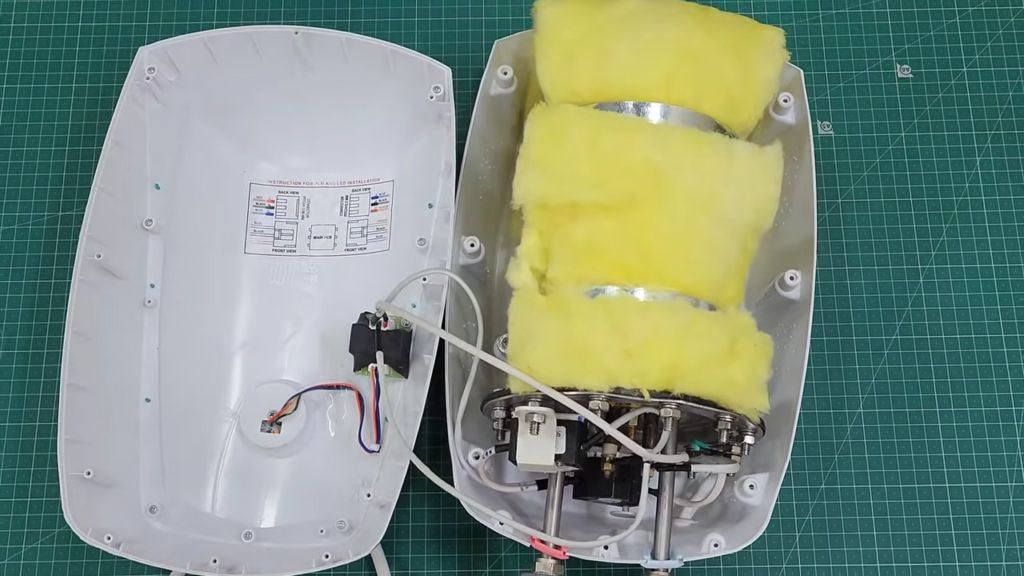
Open your hot water tap fully and let it run until the flow becomes steady and smooth. Air trapped inside the tank often blocks pressure, especially after new installation or if the geyser hasn’t been used for a while. This quick vent restores normal flow almost immediately.
Descale the Tank & Heating Element
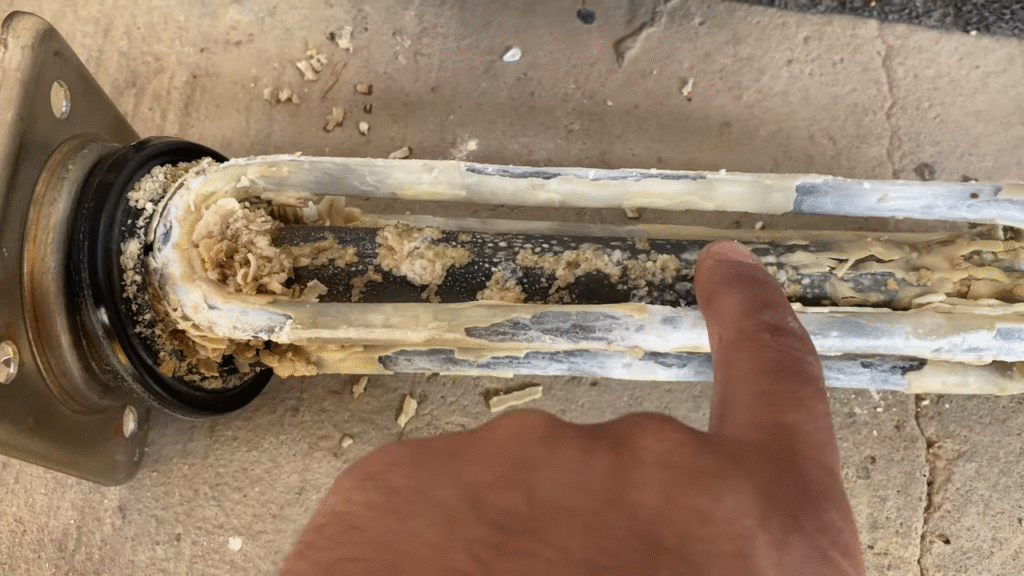
If you live in a hard-water area, schedule annual descaling. Limescale and sediment build up inside the tank and around the heating element, narrowing water pathways. Flush the tank, clean the element, and you’ll see flow and heating efficiency improve noticeably.
Clean Shower Mixer Filters
When other taps give good pressure but your shower doesn’t, the issue’s likely in the mixer. Remove the mixer cap and clean the tiny inlet filters with a soft brush. Debris collects here over time, choking hot water flow. It’s a 5-minute fix that works surprisingly well.
Increase Height or Use a Booster Pump (If Needed)
If your overhead tank sits too low and can’t be raised, consider installing a mini booster pump. This helps maintain consistent pressure for all your taps, including the geyser. It’s especially useful in older homes where gravity pressure just isn’t enough.
Suggested Read: Geyser Not Heating Water Solutions
When Low Geyser Pressure Is a Safety Issue?
Low pressure isn’t always just an inconvenience. Sometimes it signals something dangerous. Watch out for these risks:
Never remove the NRV in multi-storey buildings
That valve stops hot water from draining backward. Without it, your tank can empty and cause dry heating, which damages the element or worse.
Incorrect pipe assembly causes backflow or dry heating
Misaligned pipes let water flow the wrong way, leaving your tank partially empty when you think it’s full.
Always fill the tank completely before switching ON
Running a geyser dry can burn out the heating element instantly. Every brand manual stresses this.
Poor-quality pipes burst under heat and pressure
Use only ISI-marked, heat-resistant flexible hoses rated for at least 6.5 to 8 bar pressure.
Preventive Tips to Avoid Low Water Pressure in the Future
A little maintenance now saves you from frustrating mornings later. Keep your geyser flowing strong:
Clean inlet and outlet filters every 3 to 6 months
Dirt and debris build up faster than you think, especially in hard-water areas.
Flush your geyser tank annually to remove limescale
Sediment narrows water pathways and reduces heating efficiency. Regular flushing keeps everything clear.
Don’t try DIY modifications on the NRV or inlet pipes
Tampering with safety valves or assemblies can cause backflow, leaks, or dry heating. Leave it to trained technicians.
Install a pre-filter if you have hard water
It catches minerals before they enter your geyser, protecting the tank and element from heavy scaling.
Schedule professional servicing once a year
Every brand manual stresses this. Annual checks catch small issues before they turn into expensive repairs.
Suggested Read: Geyser Smelly Water Problems & Solutions Guide
DIY Fix vs Professional Service – What Should You Choose?
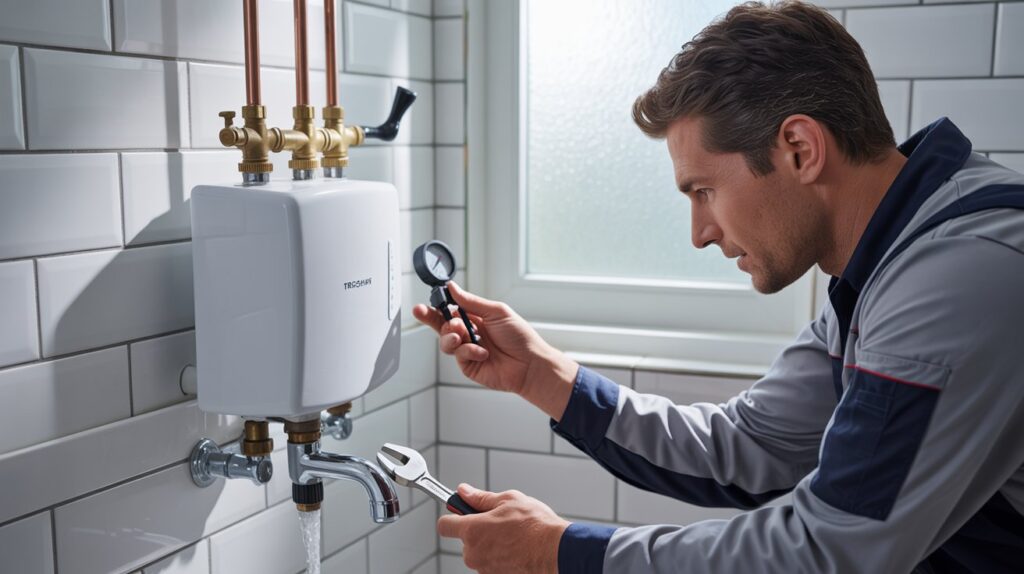
Some fixes are simple enough to try at home. Others? Best left to the experts.
You can handle these yourself:
- Cleaning outlet filters is straightforward.
- Just unscrew, rinse away debris, and reconnect. It’s simple and safe. Releasing trapped air is even easier.
- Open your hot water tap fully until the flow steadies.
- No tools needed. If your shower pressure is weak, check the mixer blockages.
- Remove the mixer cap, clean the tiny filters inside, and you’re done.
Call a professional for:
- NRV modification isn’t something to experiment with.
- Tampering with safety valves can cause backflow or dangerous dry heating.
- Let trained technicians decide what’s safe for your setup.
- Internal tank descaling requires opening the geyser, removing the heating element, and proper reassembly.
- One wrong move damages the tank or element.
- Replacing inlet or outlet assemblies demands precision.
- Wrong fittings lead to leaks or reduced flow.
- And never touch electrical or thermostat inspections yourself.
- The risk of shock or fire is real. Always hire certified electricians.
Suggested Read: How to Install a Geyser (Water Heater) – Step-by-Step Guide
Why Choose Concord Services for Geyser Pressure Issues?
Our technicians have hands-on experience with all major geyser brands. We do on-site inspections, use only genuine parts, and handle modifications safely without compromising your geyser’s protection features. Whether it’s low pressure, heating problems, or installation fixes, we deliver quick turnaround times. Plus, our repair packages are affordable and tailored to fit your home setup perfectly.
Frequently Asked Questions
1. Why is my geyser giving very low hot water pressure?
Low pressure usually comes from clogged filters, trapped air, limescale buildup, or a restrictive non-return valve.
2. Can removing the NRV increase water pressure?
Yes, removing the NRV spring can boost flow 3 to 5 times, but only in ground-floor homes and with technician approval.
3. Why do I get only 3–4 litres from a 15L geyser?
Blocked or misaligned pipes, trapped air, or sediment buildup limits usable hot water from your tank.
4. How do I know if my geyser’s inlet filter is blocked?
Suddenly weak hot water flow while cold water runs strong signals a blocked filter.
5. Can hard water affect geyser water pressure?
Yes, limescale and mineral deposits narrow water pathways inside the tank, reducing flow over time.
6. Does the height of the overhead tank matter for geyser pressure?
Absolutely. Low tank height weakens gravity pressure, making hot water flow sluggish.
7. Do instant geysers also face low pressure issues?
Yes, instant geysers get low pressure from clogged filters, air blockages, or faulty valves.
Most low pressure issues boil down to simple fixes like clogged filters, trapped air, or restrictive valves. With regular servicing and proper installation, your geyser can deliver strong, consistent hot water every time. Don’t let weak flow ruin your mornings. Book a service with Concord Services today and get your geyser back to full pressure fast.