Electric Shock From Geyser? Safety Tips & Quick Fix Guide
Getting shocked from your geyser? Learn safe fixes, common causes, and expert tips, Protect your home with simple steps before the problem becomes risky.
Why Is Geyser Electric Shock a Serious Warning?
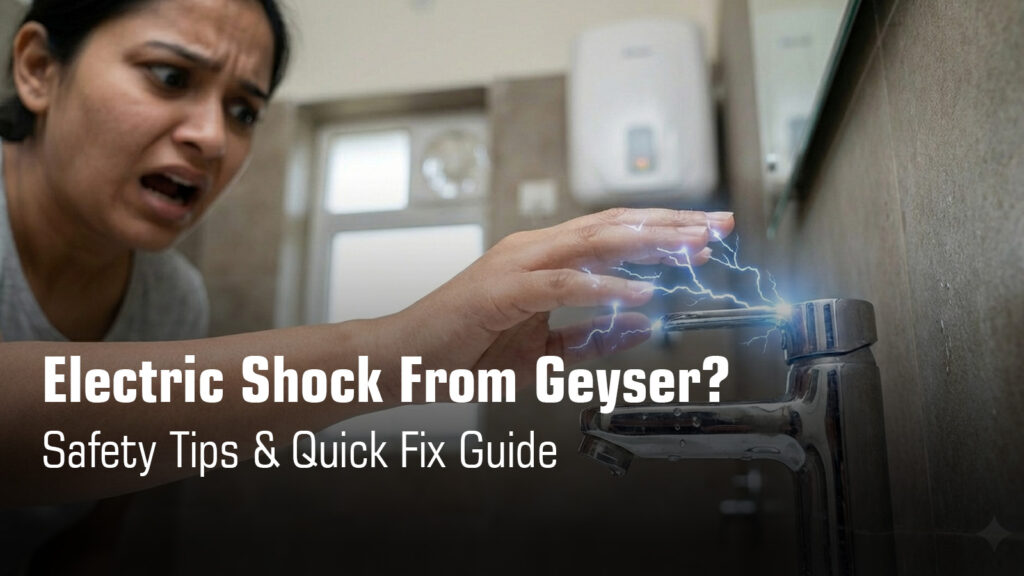
That tingling sensation when you touch the tap or shower? It’s terrifying. One moment you’re reaching for warm water, the next you’re jolting back in shock. Let’s be honest, it shouldn’t happen.
Modern geysers come loaded with safety features like thermal cutouts, ELCBs, and proper earthing systems. So when you feel that current, something’s gone wrong. Usually, it’s faulty wiring, a damaged heating element, or poor earthing.
Here’s the thing: most of these issues can be diagnosed and fixed. You just need to know what to look for and when to call for help.
Is It Normal to Get Shock from a Geyser?

No. Any tingling or shock you feel is not normal and signals danger.
Even though modern geysers are designed with multiple safety layers, electric shock can happen when:
Static vs. Real Shock:
Static electricity feels like a quick, harmless zap, especially in dry weather or with certain fabrics. True electrical leakage is continuous, painful, and dangerous. If the sensation persists or feels strong, switch off power immediately and call a technician.
Step-by-step safety checklist if you feel electric shock from a geyser
Not Confident To Repair Your Geyser?
Contact Us For Same Day Doorstep Repair
₹0 Advance Charges
Common Causes of Electric Shock from a Geyser
Faulty or Damaged Heating Element

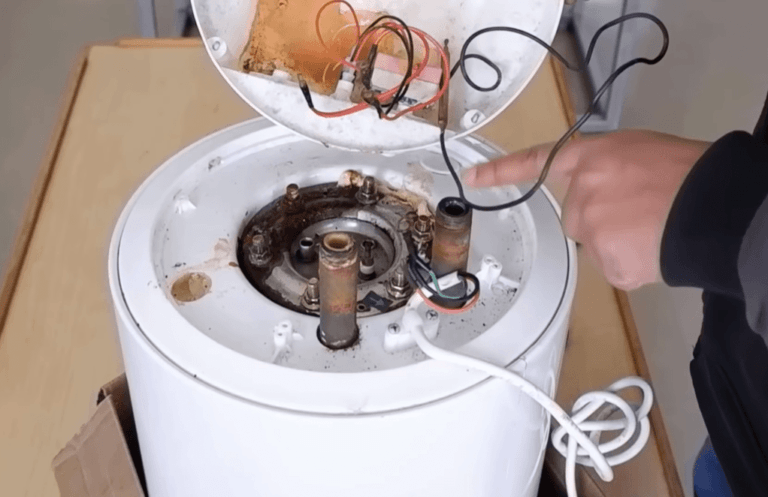
When the heating element’s insulation breaks down, electric current leaks directly into the water. Multiple repair guides identify faulty elements as the top cause of current leakage in geysers. Corrosion from poor water quality or lack of maintenance accelerates this damage, making the water itself conduct electricity dangerously.
Improper or Failed Earthing
Poor grounding is one of the biggest dangers in geyser installations. If the earthing system is weak or disconnected, any leakage current has nowhere safe to go. Moisture on terminals then becomes live, and touching the tap or geyser body completes the circuit through your body to the ground, causing shock.
Moisture on Live Terminals
Water seeping into the terminal block, switch box, or control panel creates dangerous leakage paths. Even small amounts of condensation can make electrical parts live. This is especially risky in bathrooms with high humidity or geysers installed near direct water splashes.
Loose or Broken Wiring
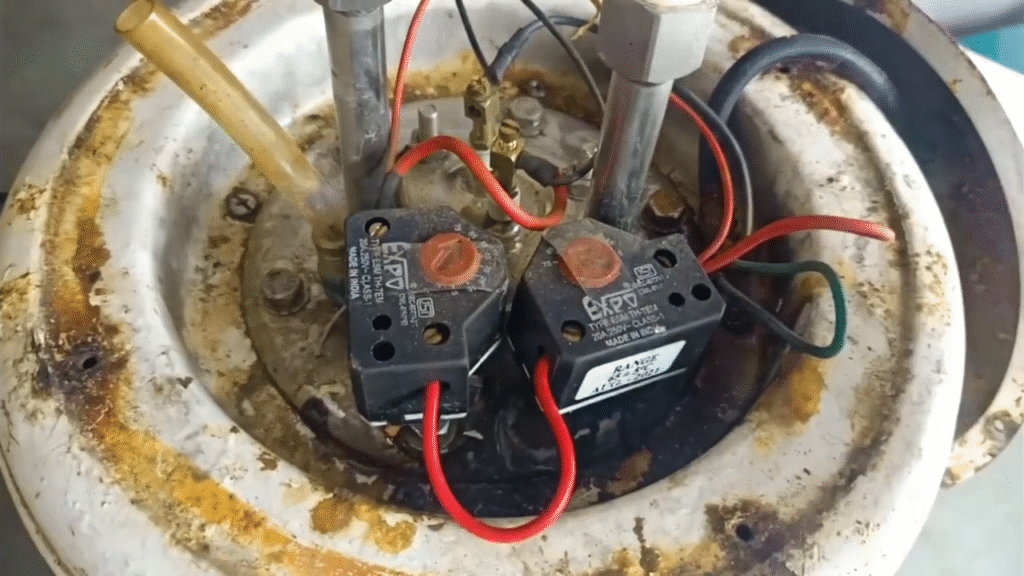
Loose connections, burnt wires near the heating element, or reversed line and neutral connections transmit voltage to the geyser body or water. Many video repair guides show carbonized wires at connection points as a common culprit. These issues develop over time due to heat cycles and poor initial installation quality.
Fault in the Heater Switch or MCB
Incorrectly wired switches or faulty MCBs create leakage paths that allow current to flow where it shouldn’t. Transposed wires (live and neutral swapped) or worn-out switch contacts also contribute to shock risk. Checking switch wiring is essential when diagnosing persistent shock issues.
Malfunctioning or Missing Safety Devices
Modern geysers include critical safety features:
- Thermostat + thermal cutout to prevent overheating
- ELCB (Earth Leakage Circuit Breaker) in premium models that cuts power immediately during current leakage, sensitive to 10mA
If these devices fail, are bypassed, or were never installed properly, shock risk increases dramatically. Regular testing of these safety systems is essential.
Static Electricity (Mild Shock)
Often mistaken for dangerous electrical leakage, static electricity causes a quick, harmless zap. It’s more common in low humidity conditions or when wearing synthetic clothing like polyester. Unlike true electrical shock, static is instantaneous and doesn’t persist. However, don’t dismiss any shock sensation without proper investigation.
Warning Signs That Your Geyser Has Electrical Leakage
Watch for these danger signals:
Any of these signs means immediate action is needed. Don’t ignore even mild symptoms.
Suggested Read: Safety tips for using Instant & Storage Geysers at Home
Step-by-Step: What to Do Immediately If You Get a Shock?
Switch Off Power at MCB
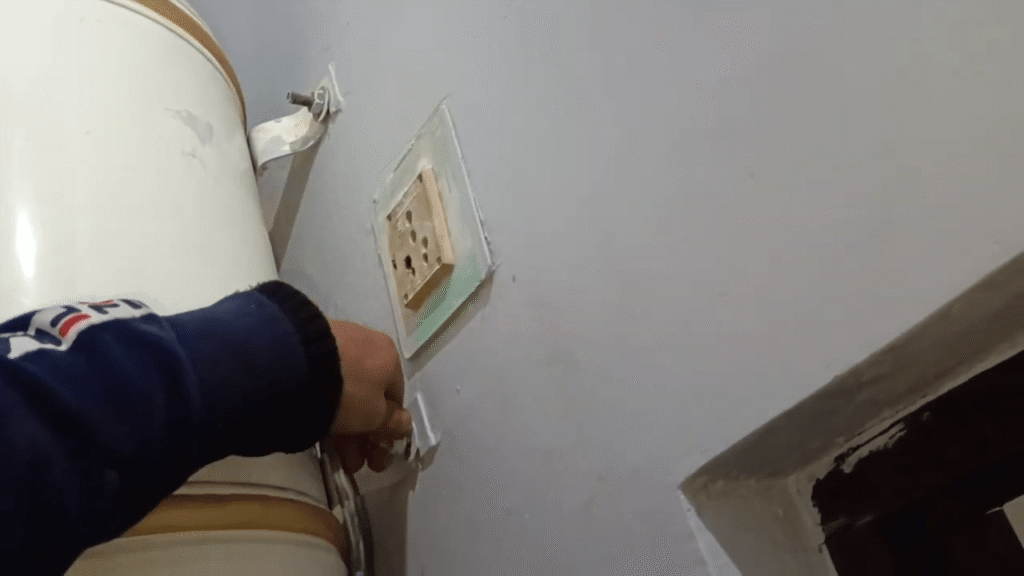
Cut power at the main circuit breaker immediately before touching the geyser, pipes, or any metal parts. Don’t just turn off the geyser switch. Disconnect the entire circuit to ensure no current flows through the system during inspection or while waiting for help.
Turn Off Water Supply
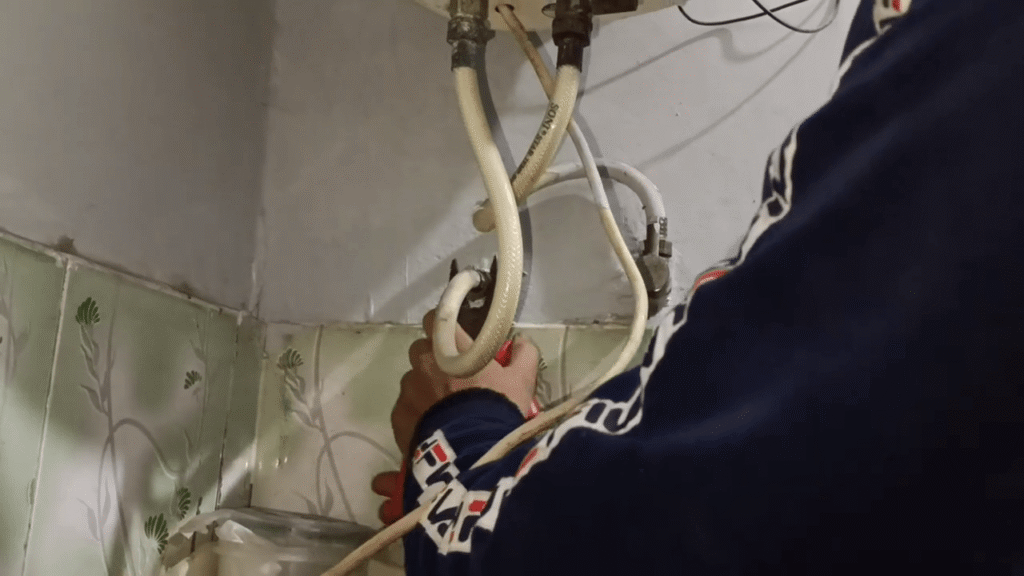
Stop the water flow by closing the inlet valve to the geyser. This prevents further use and reduces the risk of water contacting live electrical parts. Don’t use hot water from the geyser until a certified technician has thoroughly inspected and cleared the unit for safe operation.
Do NOT Touch Metal Parts
Taps, shower heads, pipes, and the geyser body may all be electrically charged due to leakage. Even after switching off the MCB, wait and avoid contact. Let only a trained technician handle inspection. Your safety comes first, always assume parts are live until confirmed otherwise.
Call a Certified Technician
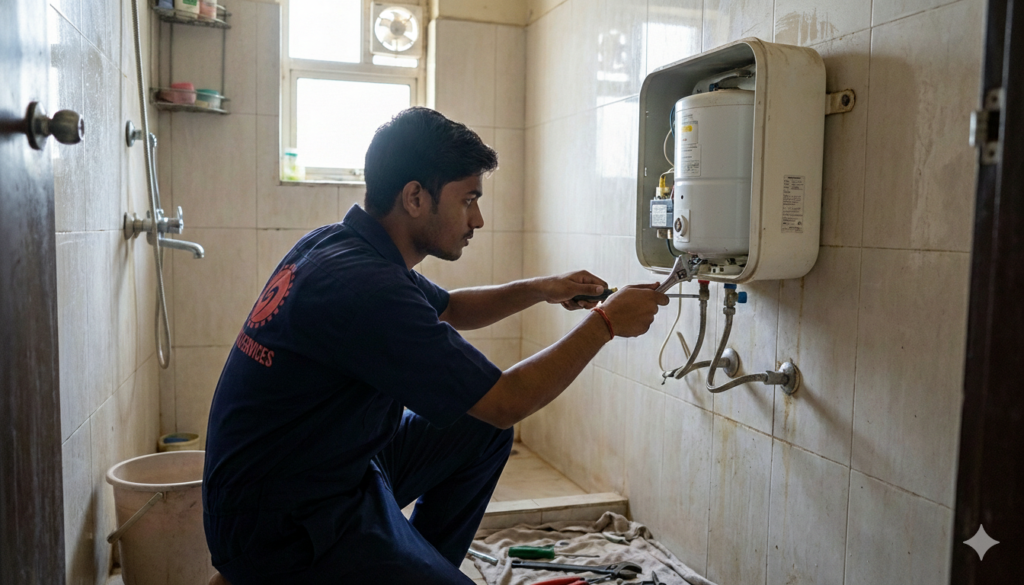
Professional help is essential, especially if:
- Water heater displays E1 leakage error with “Call Technician” tune
- Thermal cutout trips frequently, indicating overheating or electrical faults
- You notice burnt wires, moisture, or repeated MCB tripping
Don’t attempt DIY electrical repairs on geysers.
Can’t figure it out on your own? No worries at all. Concord Services is here to help with expert geyser repair in Kolkata. Trusted by homeowners across the city, we provide fast, reliable solutions to get your geyser working safely again, right when you need it.
Expert Preventive Tips to Avoid Future Electric Shock
Ensure Proper Earthing and Quality Wiring
Never connect the earth wire to neutral or water pipes. AO Smith and Havells manuals strictly prohibit wrong polarity or shared earth connections, as this defeats the entire safety system.
Avoid Installing in Direct Water Splash Zones
Install the geyser at least 1.8 meters from the floor and away from areas where water can directly splash on it. Several manuals warn that moisture entering electrical parts creates serious shock hazards.
Always Fill the Geyser Before Switching On
Operating the geyser without water causes dry heating, which damages the heating element insulation and leads to current leakage. This critical warning appears across Havells, Symphony, and AO Smith manuals.
Use Only Recommended Quality Flexible Hoses
Use only stainless steel braided hoses with minimum 8 bar pressure rating, compatible for hot water. AO Smith specifically warns against poor quality hoses that can burst or create short circuit risks.
Schedule Annual Servicing
All brands recommend yearly inspection for wiring condition, leakage checks, and anode rod replacement. Clean scale deposits regularly to prevent moisture-related electrical failures and maintain proper insulation around heating elements.
Don’t Ignore Repeated Thermal Cutout Trips
Frequent tripping of the thermal cutout or red indicator light signals overheating or serious wiring faults. This is not normal operation and requires immediate technician attention.
Install RCCB/ELCB + MCB Combination
This dual protection setup is strongly recommended for complete shock protection. ELCB detects leakage current and cuts power instantly, while MCB protects against overload and short circuits.
Suggested Read: Geyser Low Water Pressure – Causes and Solutions
When to Replace Your Geyser Instead of Repairing?
Consider replacement instead of repair when:
Sometimes, replacement is safer and more economical than ongoing fixes.
Even a mild electric shock is a warning. Stop using the geyser immediately. Prioritise proper installation, working safety devices, and yearly servicing. For accurate diagnosis and safe repairs, trust Concord Services to restore comfort without risking your family’s safety.