Microwave Oven Tripping Circuit Breaker – Quick Fixes [Checklist]
Is Your Microwave Tripping The Circuit Breaker? Learn The Common Causes, Safety Risks, And Quick Fixes To Know When To Troubleshoot Or Call A Technician.
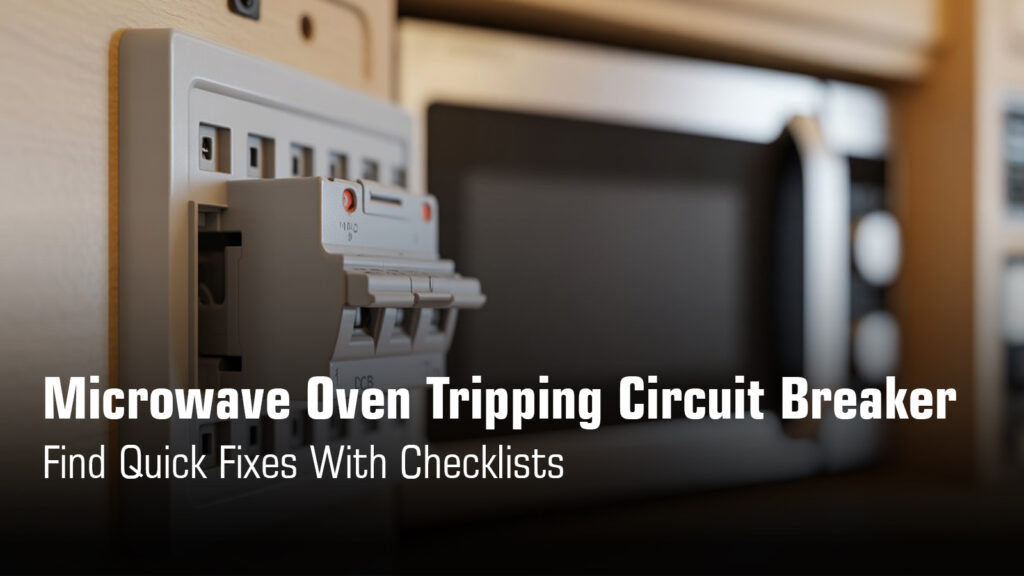
When your microwave trips the circuit breaker, it’s not just annoying. It’s a red flag.
Here’s the thing: a microwave that keeps knocking out your power isn’t throwing a tantrum. It’s signaling that something inside is overloading your circuit, or worse, there’s a dangerous electrical short. This could mean a shorted magnetron, worn door switches, or damaged internal wiring. Either way, it’s pulling too much current and your home’s electrical system is cutting power to protect you from overheating, sparking, or even fire.
This isn’t a “fix it later” problem. It’s an electrical safety issue that needs attention now.
In this guide, you’ll quickly identify the cause and know what you can safely fix versus when to stop and call a technician. Let’s get your kitchen back to normal, safely.
Quick Checklist to Fix Microwave Oven Tripping Circuit Breaker Problem
Hire Concord Service’s Experts in Kolkata for
Sameday Microwave Oven repair
₹0 Advance Charges
Quick Diagnostic Table
| Symptom | Likely Cause | User-Safe Action | Technician Needed |
|---|---|---|---|
| Trips immediately on Start | Shorted HV capacitor / diode | ❌ None | ✅ Yes |
| Trips after few seconds | Magnetron / fan issue | ❌ None | ✅ Yes |
| Trips only sometimes | Shared socket / weak MCB | Change outlet | ❌ |
| Trips when door closes | Door switch fault | ❌ None | ✅ Yes |
| Trips during heating | Internal wiring / fuse | ❌ None | ✅ Yes |
Why a Microwave Trips the Circuit Breaker?
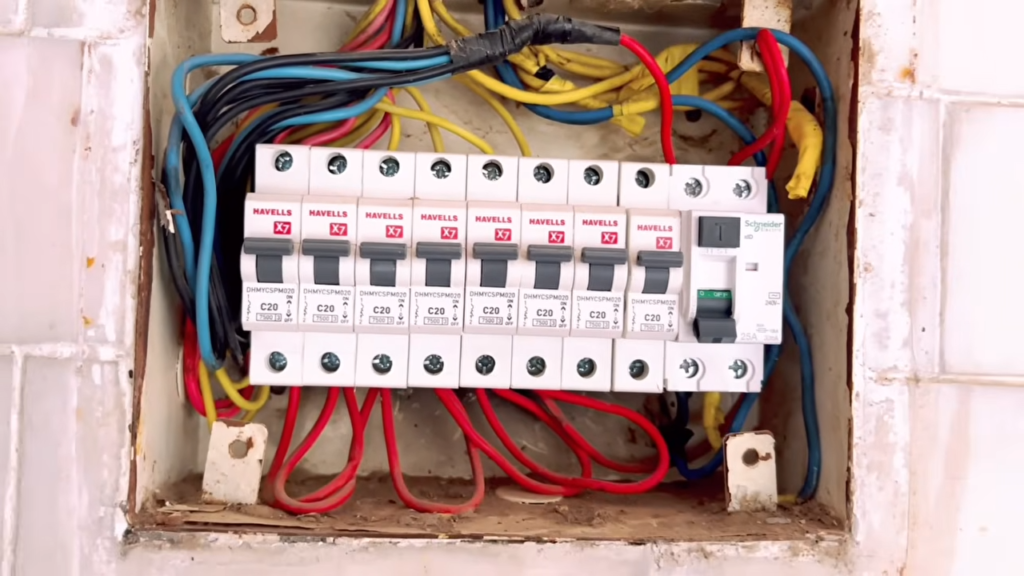
Microwaves draw around 12 amps when they start. That’s a lot. Most household circuits are rated for 20 amps, so adding a toaster or coffee maker on the same line pushes things over the edge.
Your circuit breaker (MCB) acts as a safety cutoff. When current exceeds safe limits, it trips to prevent overheated wiring, which can melt insulation and cause fires. Grounding protects you from shock by diverting stray current safely to ground.
If there’s a short inside the microwave (like a shorted magnetron or capacitor), the breaker stops disaster before it starts.
What Causes Microwave Oven to Trip MCB?
Using Microwave on a Shared or Overloaded Circuit
Running your microwave alongside a fridge, kettle, or air conditioner on the same circuit pushes the total load past safe limits. Most circuits handle 20 amps, but microwaves alone draw 12 amps. When multiple appliances share one line, you’ve got a recipe for constant trips. Always plug your microwave directly into a dedicated wall socket.
Fix: Test on a separate outlet in another room to confirm overload.
Faulty Wall Socket, Plug, or Extension Cord
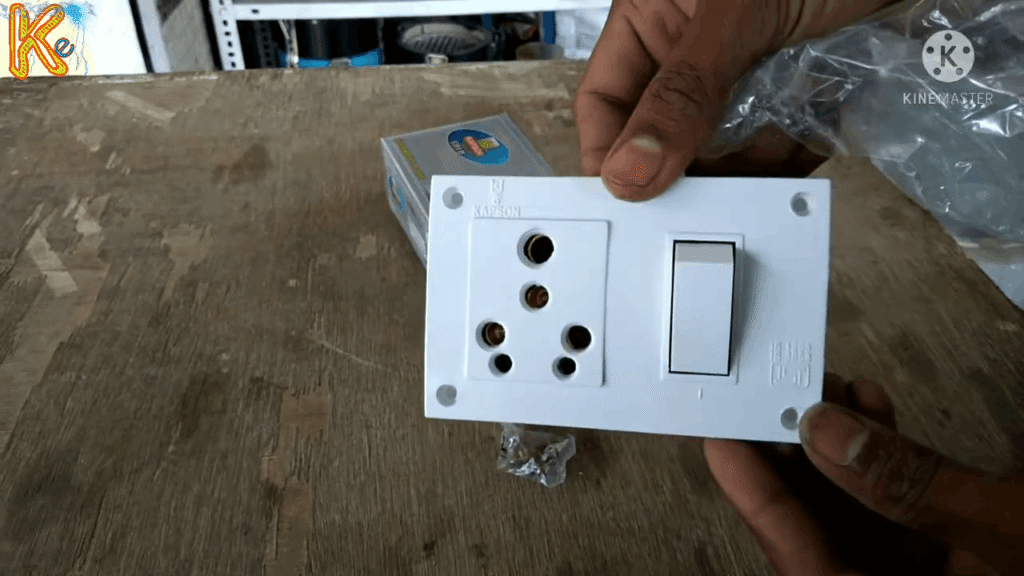
Loose sockets create current surges. Extension cords can’t handle the microwave’s power demand and cause dangerous heat buildup. Check the socket visually for melting plastic, burnt marks, or a wobbly plug connection. The microwave must plug directly into a properly grounded wall outlet.
What you can check: Plug another appliance into the outlet to verify it works properly.
Suggested Read: Microwave Oven Earthing Problem – Quick Fix
Internal Fuse or Short Circuit
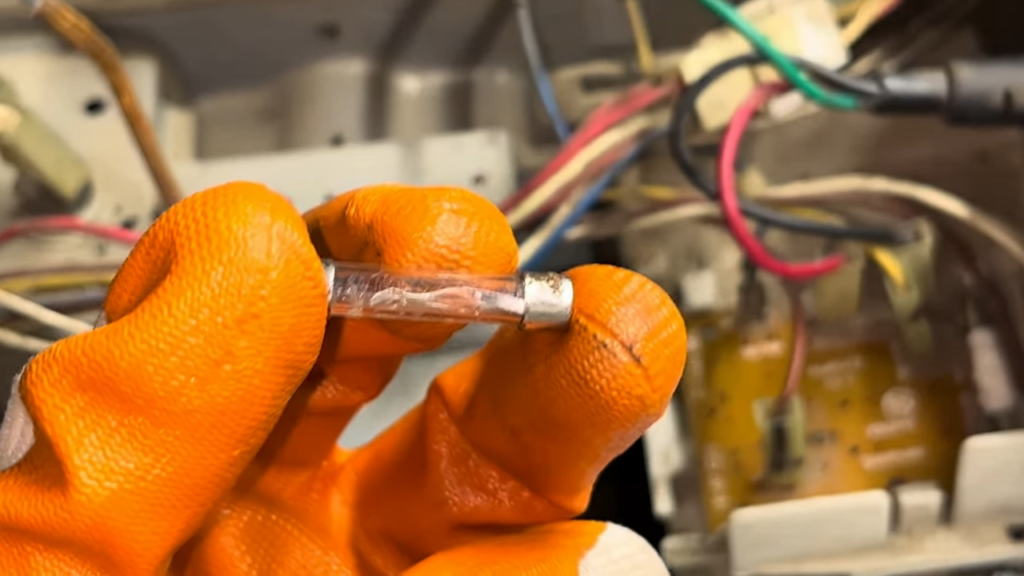
The microwave fuse (rated 15 to 20 amps) protects internal components by cutting power during surges or shorts. When it blows, the unit goes completely dead. If fuses blow repeatedly after replacement, there’s a deeper internal fault like a shorted capacitor or magnetron drawing excess current.
Important: Fuse replacement alone is not a fix, it’s a temporary Band-Aid.
Suggested Read: Microwave Oven Fuse Problem
High-Voltage Capacitor or Diode Failure (Critical Section)
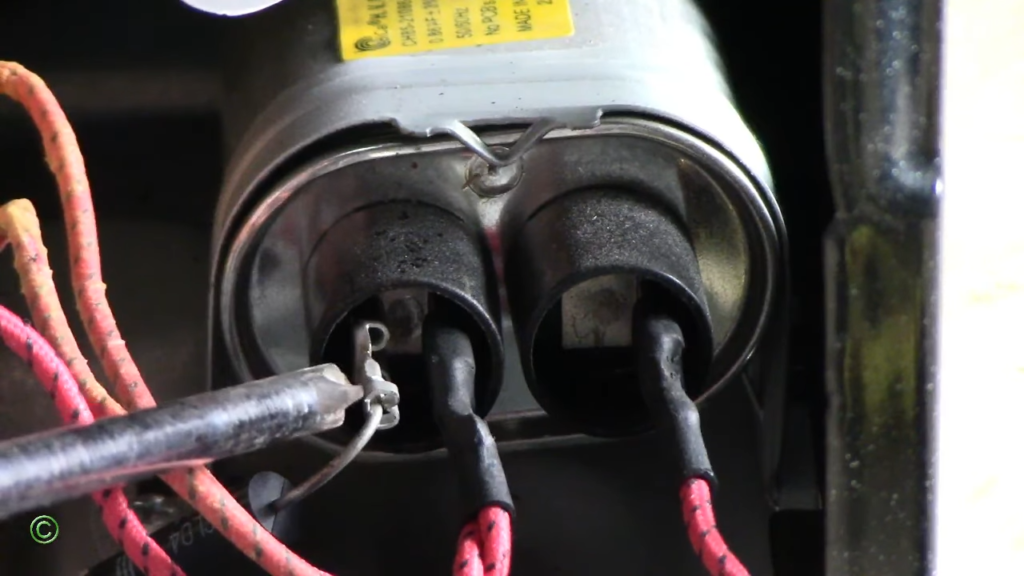
A shorted high-voltage capacitor or diode creates instant breaker trips. These components operate at thousands of volts and double the transformer’s power. When they fail, current flows where it shouldn’t. Even when unplugged, the capacitor stores lethal voltage for months.
DO NOT OPEN THE MICROWAVE.
High-voltage components require professional discharge procedures. One wrong touch can be fatal.
Magnetron or Transformer Drawing Excess Current
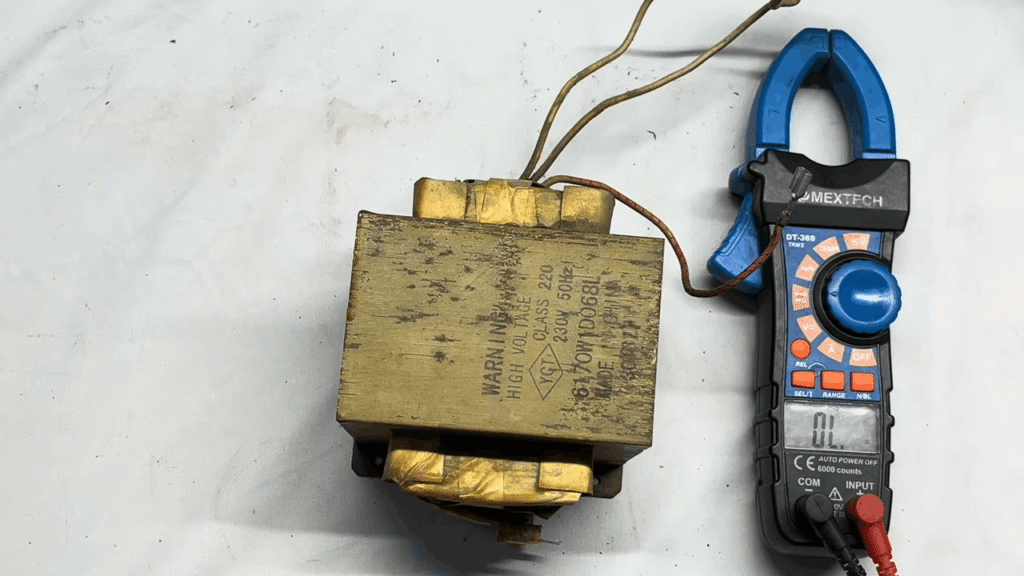
A failing magnetron makes a loud hum or buzzing, then trips the breaker when it tries to start heating. The transformer supplies power to the high-voltage circuit. When it fails, it arcs, smells burnt, and pulls excessive current.
Repair vs. replacement: Both parts are expensive. On an older microwave, replacement often costs less than repair.
Suggested Read: Microwave Making Loud Noise – Causes and Fixes
Faulty Door Interlock Switches
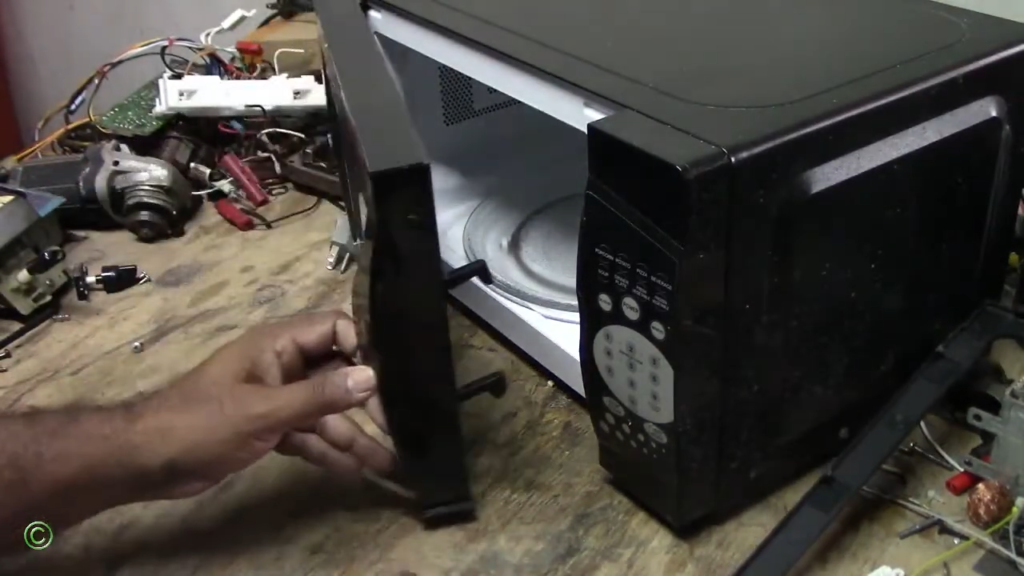
Microwaves have three to four door switches (primary, secondary, and monitor interlock). They prevent operation when the door’s open. A worn or shorted switch creates a dead short when the door closes or Start is pressed, instantly tripping the breaker.
Signs to watch for: Breaker trips the moment you shut the door or hit Start.
Poor Earthing / Grounding Issue
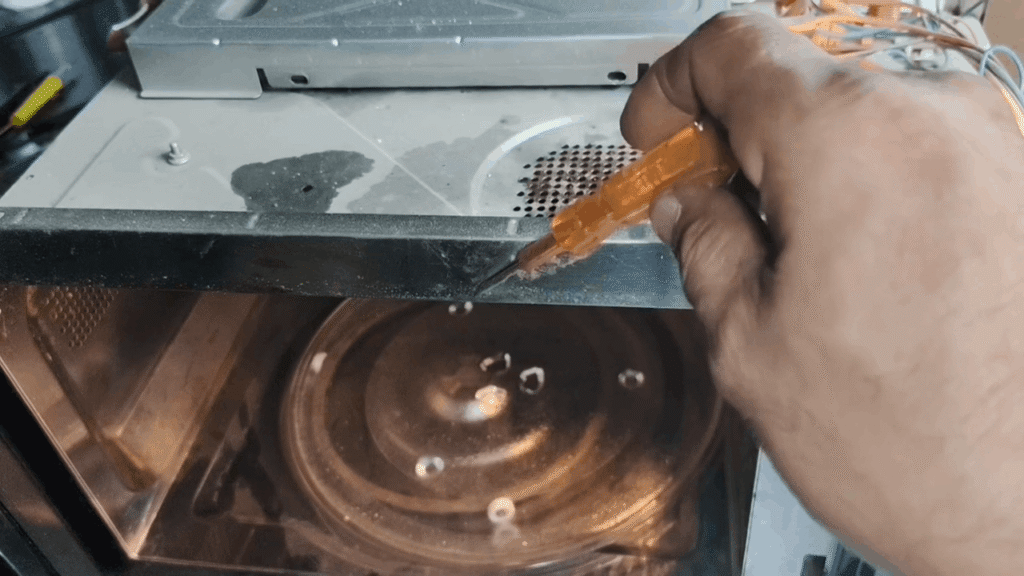
Improper grounding lets stray current leak to the chassis instead of safely flowing to ground. This causes the breaker to trip instantly, especially common in older homes with two-prong outlets. Without proper earthing, internal shorts will trip MCBs every time.
Who fixes it: Call an electrician for wiring/grounding faults. Call an appliance technician for internal microwave problems.
Can’t fix it yourself? Concord Services offers fast, reliable microwave oven repair in Kolkata to restore safe and efficient performance.
When to Stop Using the Microwave Immediately?
Breaker trips repeatedly:
If your breaker trips over and over, even after you’ve reset it, the microwave has a serious internal fault. Repeatedly tripping deteriorates the breaker itself, and if it fails to trip when it should, overheated wiring becomes a fire hazard.
Burning smell or sparks:
Any burning odor, visible sparks, or arcing inside the cavity means components are overheating or shorting. This signals failing high-voltage parts like the capacitor, diode, or transformer, which can arc and create electrical fires.
Microwave trips breaker even when idle:
If the breaker trips the moment you plug the microwave in (before you even turn it on), there’s a direct short circuit inside. This means live wires are touching where they shouldn’t, creating an instant fire and shock risk.
MCB does not reset properly:
When the circuit breaker won’t stay in the “on” position or keeps flipping back off immediately, the short circuit is so severe that the breaker is protecting you from catastrophic failure. Never force it or bypass the breaker.
Should You Repair or Replace The Microwave Oven?
If your microwave is 7 to 10 years old, replacement often makes more sense than repair.
Magnetron or high-voltage part replacements cost nearly as much as a new unit with a warranty.
When internal faults involve dangerous components like shorted capacitors or transformers, buying new eliminates safety risk entirely and gives you peace of mind.
Final Words
A microwave that trips your breaker isn’t just annoying. It’s dangerous. Repeated trips mean internal shorts, overheating wires, or failing high-voltage parts that can spark fires or cause shocks.
Don’t guess. Don’t keep resetting the breaker hoping it stops. Get a proper diagnosis from someone who knows what they’re doing.
If your microwave keeps tripping the breaker, stop using it and get it checked by a qualified technician. Your safety is worth more than convenience.