
Microwave Oven Condensation Problem – Troubleshoot Now [Checklist]
Water Droplets Inside Your Microwave? Learn Why Condensation Happens, When It’s Normal, Easy Fixes, And When You Should Call A Technician.
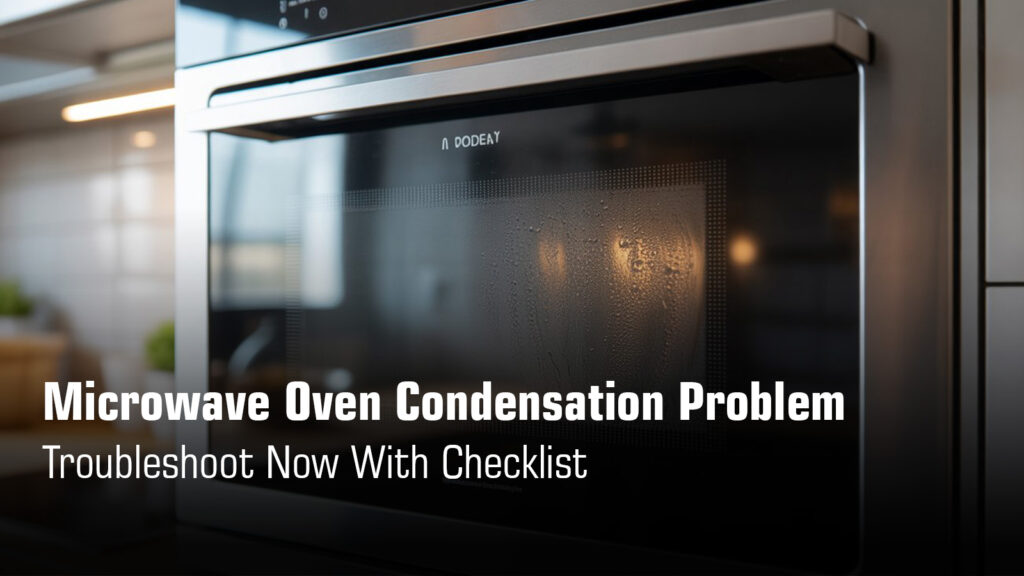
You’ve probably noticed water droplets on your microwave door after heating food. Before you worry, here’s the truth: condensation is usually normal, not a fault.
Microwaves create steam by heating water molecules in food, and when that steam hits cooler surfaces like the door glass or cavity walls, it turns into moisture.
Sometimes you’ll even see fog between the door’s glass panels. This guide helps you quickly spot the difference between everyday condensation and the rare times when something actually needs fixing.
Quick Fixes for Microwave Condensation
Call Us For Sameday Doorstep Microwave Oven Repair in Kolkata & Surrounding Areas
₹0 Advance Charges
How Condensation Forms Inside a Microwave Oven?
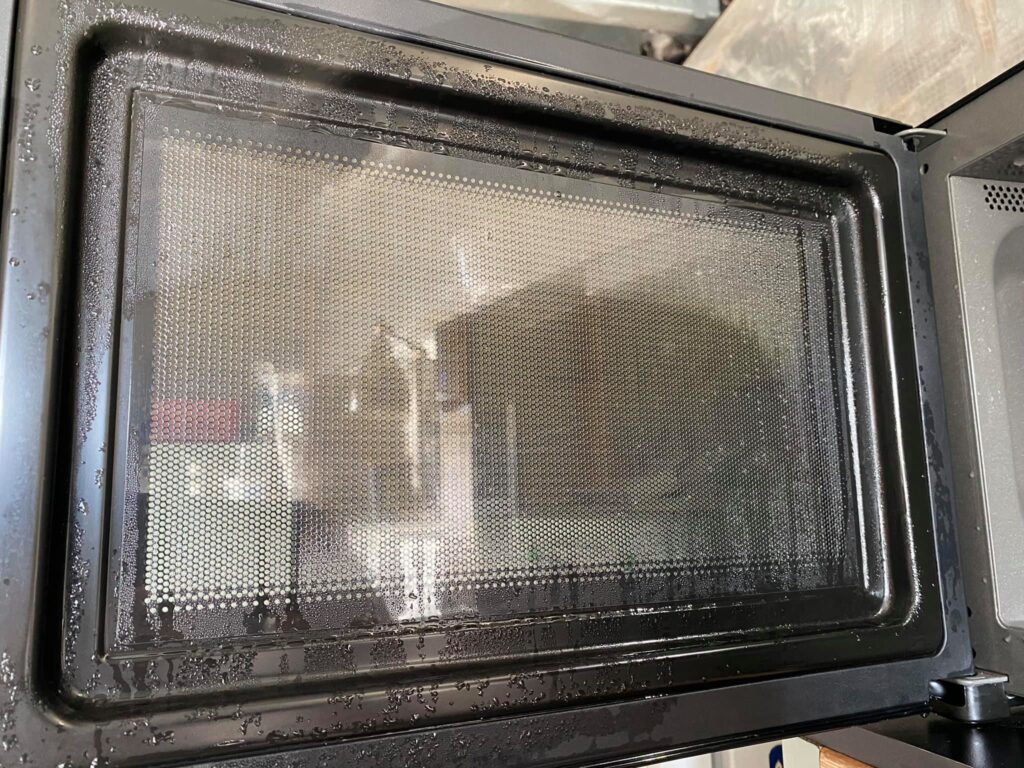
Your microwave works by agitating water molecules inside your food. When those molecules move fast enough, they create heat, cooking your meal from the inside out. But here’s what happens next: all that heating releases steam, just like boiling a pot of water on your stove.
That warm, moist air rises and hits the cooler surfaces inside your microwave. When steam meets something cold, it turns back into water droplets.
You’ll notice these forming on the inner cavity walls, clinging to the door glass, and sometimes even getting trapped between the door’s glass layers.
Where Condensation Appears:
What Makes It Worse?
Certain conditions turn normal moisture into heavy condensation. Cooking high-moisture foods like soups, vegetables, or rice releases more steam than reheating dry items.
If your kitchen is cold, the temperature difference between hot steam and cool surfaces becomes more extreme, creating more water droplets.
Long cooking times mean more steam buildup, especially without proper airflow.
Modern microwaves have efficient insulation and multi-layer glass doors that trap steam inside, making condensation a completely normal part of the cooking process.
Can’t fix the issue yourself? Concord Services provides quick, trusted microwave oven repair in Kolkata to bring your appliance back to safe and efficient performance.
Common Places Where Condensation Appears
| Location of Moisture | What It Usually Means |
|---|---|
| Droplets on inside cavity walls and ceiling | Completely normal steam buildup from cooking. Wipe with a dry cloth after each use to prevent rust or corrosion over time. |
| Water on inner door glass surface | Normal condensation after cooking, especially with high-moisture foods. Should disappear when wiped or air-dried with door left slightly open. |
| Fog or moisture trapped between door glass panels | Usually normal after extended cooking with lots of steam. Typically evaporates naturally over time. Running the microwave briefly can help clear it faster. |
| Heavy water pooling or running down the door | Possible ventilation blockage, damaged door seal, or failed silicone seal between glass layers. If excessive or persistent, contact a technician for inspection. |
Is Condensation Inside the Door Glass a Problem?
Modern microwaves have multi-layer glass doors designed to trap heat efficiently, which also means they trap steam. When you cook high-moisture foods, that steam can work its way between the glass panes, creating fog or visible moisture that might worry you at first.
Here’s the good news: moisture between the door glass panels is usually temporary and harmless. It typically occurs after extended exposure to water vapour and evaporates naturally on its own over time. If you want to speed things up, briefly running your microwave can help clear the fog faster.
⚠️Critical Safety Warning:
Never attempt to open, remove, or disassemble your microwave door or glass panels yourself. For safety reasons, microwave doors must only be detached or serviced by authorized technicians. The door assembly contains safety interlocks and seals that protect you from microwave energy exposure. DIY attempts can compromise these safety features and create serious hazards.
If condensation between the glass persists for weeks or you notice water pooling heavily, that’s when you should contact a professional technician for inspection.
Suggested Read: How to Safely Use Microwave Oven At Your Home?
How Can You Reduce Microwave Condensation?
After Cooking
Once your microwave cools down, grab a clean, dry cloth and wipe the cavity walls, ceiling, and inner door surface to remove all visible moisture.
Leave the door slightly open for 10-15 minutes to let any remaining steam escape and the interior air out completely before closing it again.
During Cooking
Always use microwave-safe vented covers or loose-fitting lids that allow steam to escape gradually while keeping moisture in your food where it belongs.
Avoid tightly sealed containers that trap all the steam inside, forcing it to condense heavily on walls and glass once you open them, and turn or stir your food midway through long heating cycles to release trapped vapour.
Kitchen Environment
Keep your kitchen well-ventilated by running an exhaust fan or opening a window when using your microwave frequently.
Never place your microwave near steam-generating appliances like electric kettles, rice cookers, or directly above stovetops, as external steam sources worsen condensation buildup inside the cavity.
Preventive Tips to Avoid Future Condensation
Always wipe moisture after use
Make it a habit to wipe down the cavity walls and door with a dry cloth every time you finish cooking to prevent corrosion and extend your microwave’s lifespan.
Suggested Read: How to Maintain A Microwave Oven for Longevity?
Cover food properly
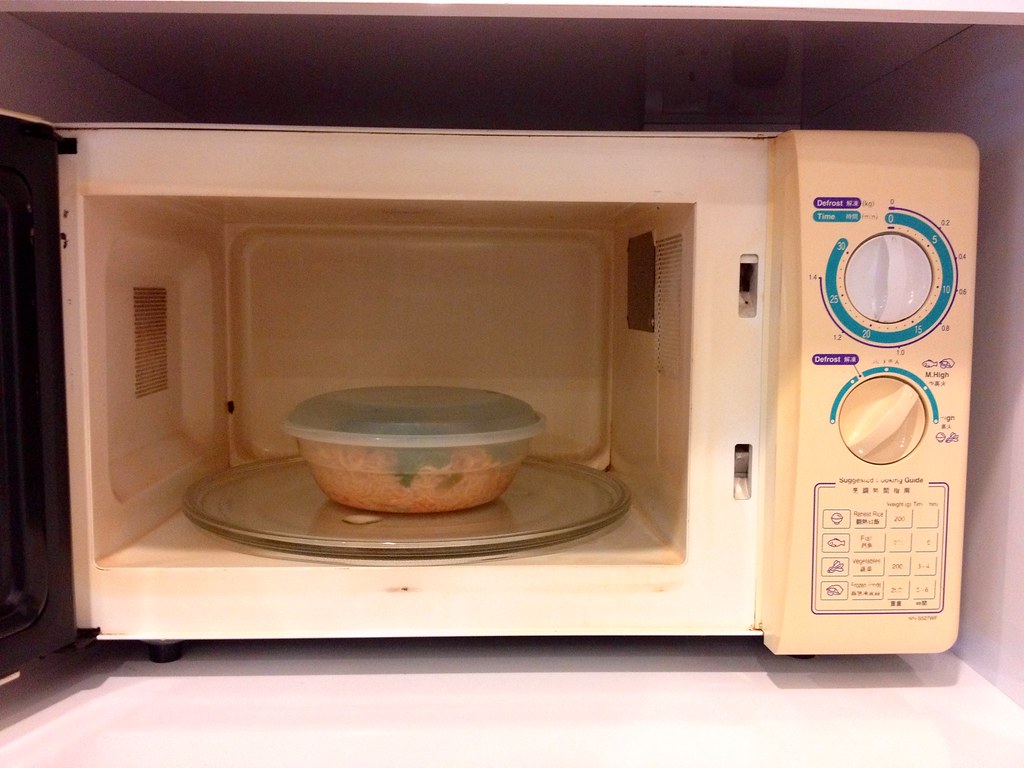
Use only microwave-safe vented covers that allow steam to escape gradually while keeping moisture where it belongs, inside your food rather than spreading across cavity surfaces.
Keep vents clean
Regularly check and clean ventilation openings to ensure proper airflow, as blocked vents trap moisture inside and prevent steam from escaping naturally.
Avoid overheating liquids
Monitor cooking times carefully and stir liquids before and halfway through heating to prevent sudden boiling that releases excessive steam into the cavity.
Maintain clean door seals
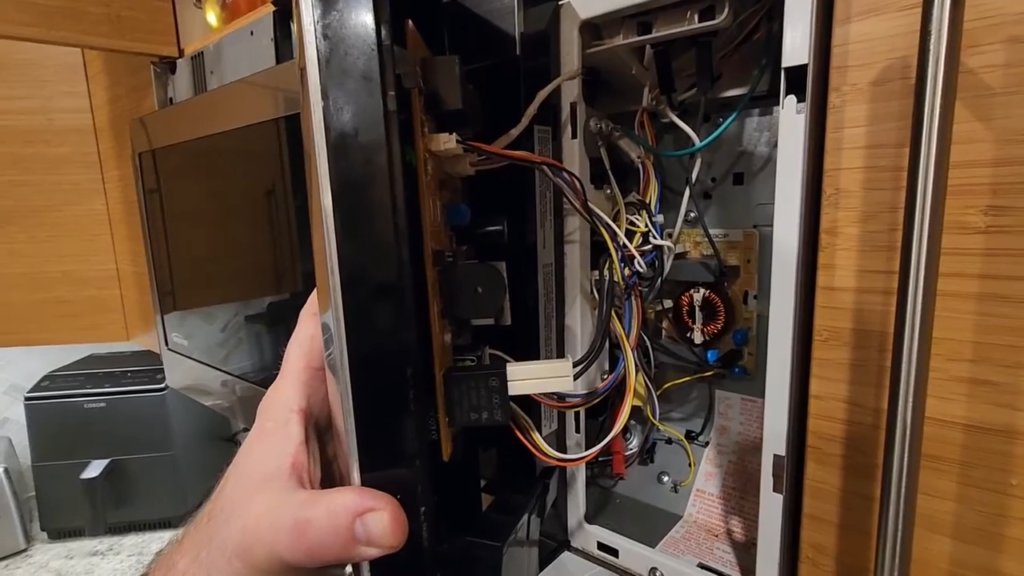
Wipe the rubber door seal and adjacent areas frequently with a damp cloth to remove spills and prevent damage that could affect the door’s ability to close properly and contain moisture.
Conclusion
Most microwave condensation is completely normal and nothing to stress about. The key is knowing when moisture crosses from everyday steam buildup into a potential problem.
If you notice water pooling heavily, persistent fog that won’t clear, or your microwave struggling to heat properly, don’t wait. Contact a qualified technician rather than attempting repairs yourself. Your safety always comes first.